Best Hairstyles and Cuts for Thin Hair
Not every short cut helps thin hair the same way. See which hairstyles and cuts for thin hair actually reduce scalp show-through, by stage of loss.
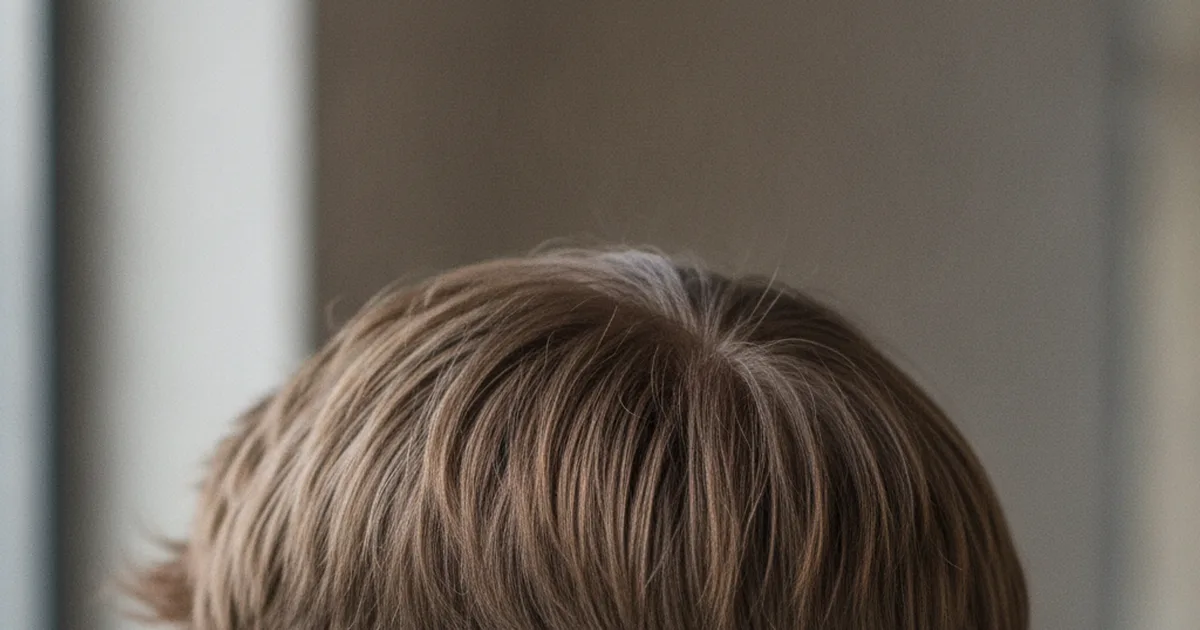
Thin hair punishes the wrong haircut fast. Grow it long to cover a receding hairline and it separates into strands under any overhead light, showing more scalp than if you'd left it short. The good news is that the right cut works with low density instead of fighting it, and most of the best options for fine or thinning hair are short, textured, and low-maintenance.
This guide sorts cuts by where you actually are: hair that's fine but still full, a hairline that's starting to move, or a crown that's genuinely thinning. Figure out your stage first, then pick the shape. And because a short cut can't be undone in a hurry, it's worth previewing a style on your own face before you sit in the chair.
Fine hair vs thin hair: know which one you have
People use these words interchangeably, but they describe two different things. Fine hair refers to the diameter of each individual strand. The hairs are skinny, so a full head of fine hair can still look flat and lack body even when you have plenty of it. Thin hair refers to density, meaning fewer strands per square inch of scalp. You can have coarse, thick strands that are simply spaced far apart.
The distinction matters because the fixes differ. Fine-but-dense hair mostly needs lift and texture so it stops lying flat. Genuinely thin hair needs a cut that minimizes the contrast between hair and scalp, so light doesn't punch straight through to the skin. Plenty of men have both at once, especially as density drops with age. Look at your part line in a bright bathroom mirror. If you can see a wide stripe of scalp, you're dealing with density. If the hair feels wispy and won't hold shape, that's strand diameter.
Why short and textured beats long and combed-over
There's a persistent instinct to grow hair out and comb it across a thinning patch. It almost always backfires. Length adds weight, weight kills volume, and flat hair sits closer to the scalp, which makes scalp show-through worse, not better. Long fine hair also clumps into visible sections, and every gap between clumps reads as skin.
Short cuts reduce that contrast. When the hair around a thin area is kept close, the eye stops comparing a full patch to an empty one. Texture does the rest. Choppy, piecey layers cast tiny shadows and break up the surface so your eye can't find a clean line of scalp. That's why nearly every recommendation below is either very short or deliberately messy on top. Both hide low density better than anything smooth and long.
If your hair is fine but still full
At this stage you have coverage. The enemy is flatness, not scalp. You want cuts that build the illusion of body and keep some length on top to play with.
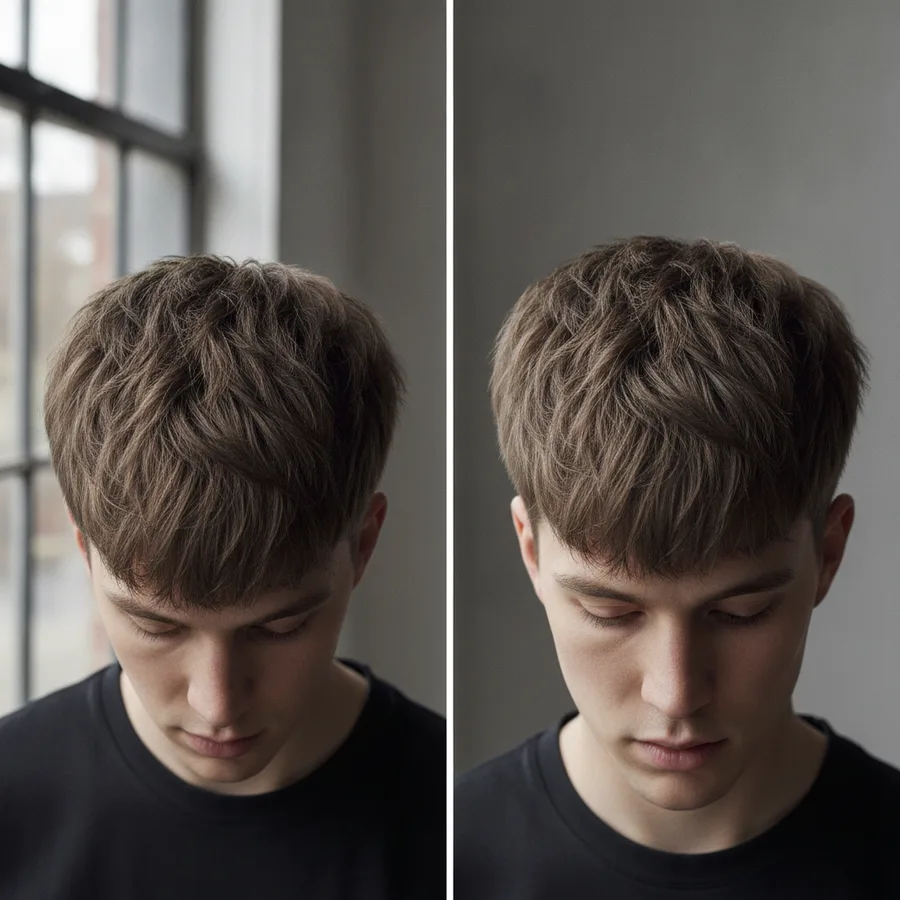
Textured crop
The textured crop keeps a few inches on top cut into irregular, choppy layers, usually with shorter sides. Styled forward and up with your fingers, those layers stand apart from each other and manufacture volume that fine hair can't produce on its own. It's the most forgiving cut on this list for hair that's dense but limp.
Side part
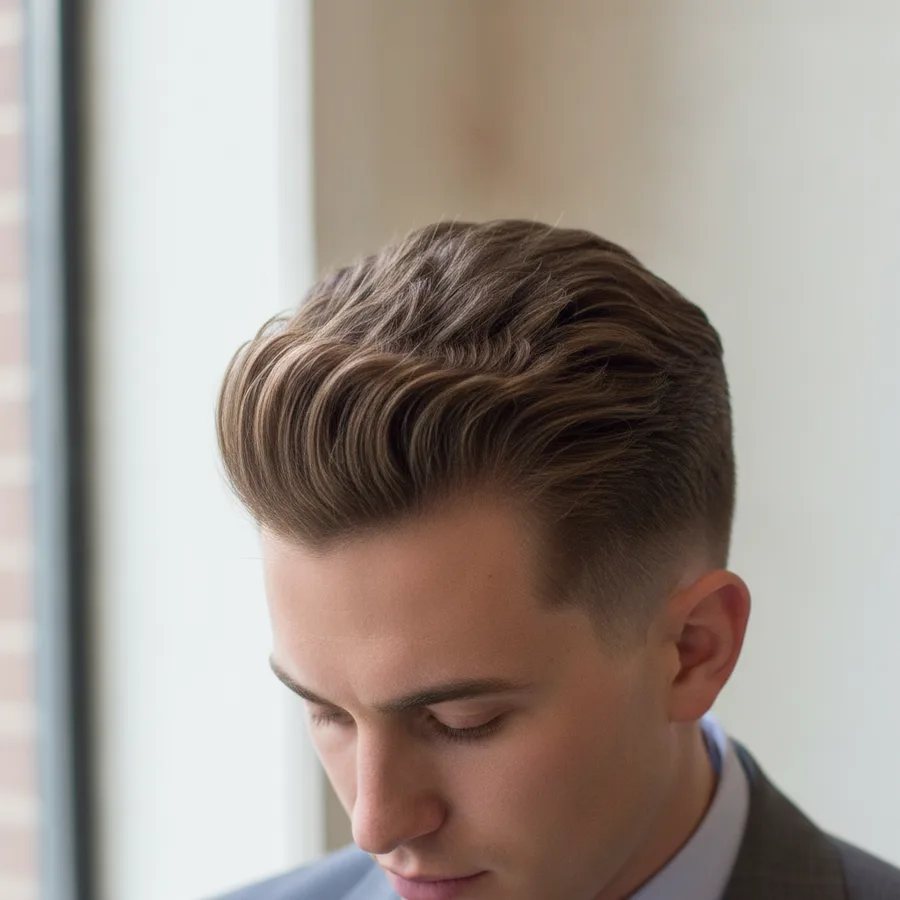
A classic side part still works on fine hair as long as the part isn't too deep and the top isn't grown too long. Blow-dry against the direction of the part to lift the roots, then set the shape. Keep the sides short so the top looks fuller by comparison. Where a side part fails is when the hair is both fine and thinning, because a hard part line exposes scalp. If that's you, skip ahead.
If your hairline is starting to recede
Early recession usually shows at the temples first, the corners of the forehead creeping back. The move here is to shorten the hairline's prominence and shift attention to texture on top. Fades and cropped fringes are your friends.
French crop
The French crop pairs a short, blunt fringe across the forehead with faded or tapered sides. The fringe is the trick: it sits over the temples and softens a receding corner instead of drawing a line at it. It suits fine hair because the top is kept short enough to stay textured rather than flat, and the forward-facing fringe needs almost no styling.
Caesar cut
A close relative, the caesar cut keeps the whole top short and brushed forward into a straight fringe. It's even lower-maintenance than the French crop and works well when the hairline is uneven, since a forward-combed fringe reads as a deliberate shape rather than a retreat. Good for coarse fine hair that won't hold a longer style.

Try before you buy
Try on outfits, accessories and more on yourself in seconds — and save money and time on returns.
Try it onFade and short back and sides
A fade haircut tapers the hair from longer on top down to skin or near-skin at the bottom, and it's the single most useful technique for thinning hair at this stage. By blending the sides down to nothing, a fade removes any obvious edge where thin meets thick, so the eye reads a clean gradient instead of patches. The traditional short back and sides does the same job with a softer, more conservative finish. Pair either with a textured top and you get a cut that looks intentional from every angle.
Undercut with buzzed sides
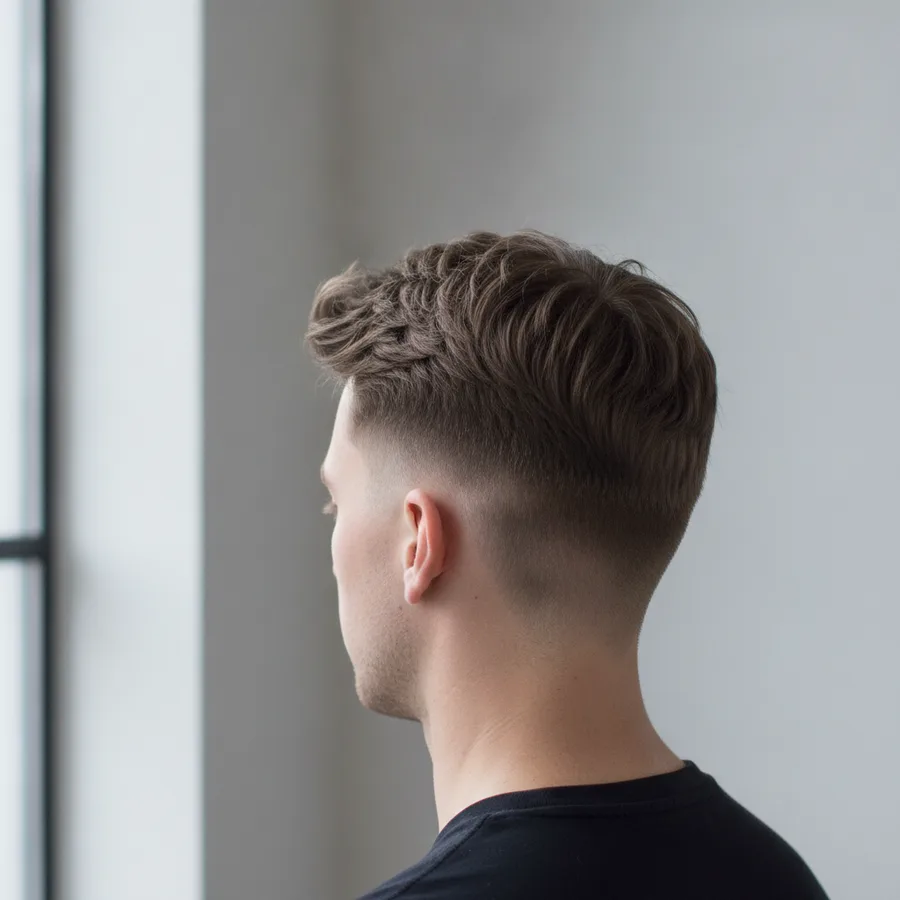
An undercut takes the sides down short in one length, with a clear contrast to a longer top. On fine hair it can look sharp, but there's a catch: if the top itself is thinning, the disconnection exposes it. Keep the undercut for cases where the top still has decent coverage and you want a defined, modern shape. Buzzed sides with a bit of length up top give a similar effect with less of a hard line.
If your crown is noticeably thinning
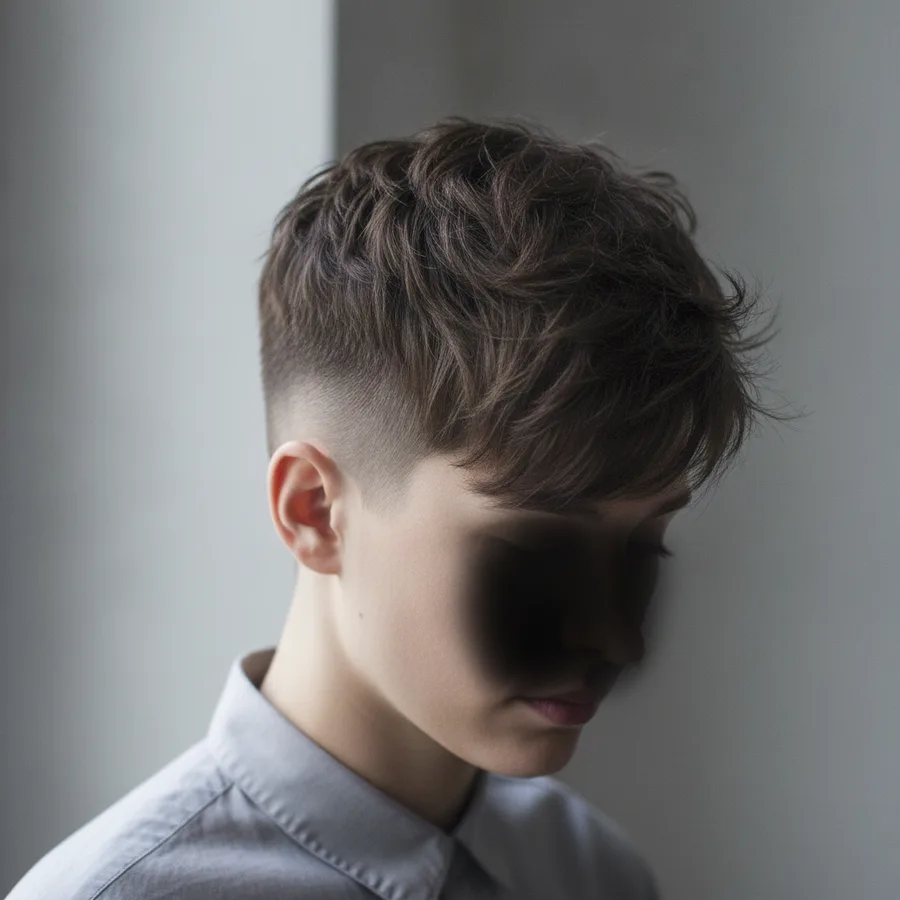
Crown thinning is trickier than a receding hairline because you can't see it well yourself, and no amount of forward styling covers the back of your head. This is often where male pattern baldness announces itself, and the honest answer is that the shortest cuts serve you best. Trying to preserve length over a thin crown almost always highlights it.
Crew cut
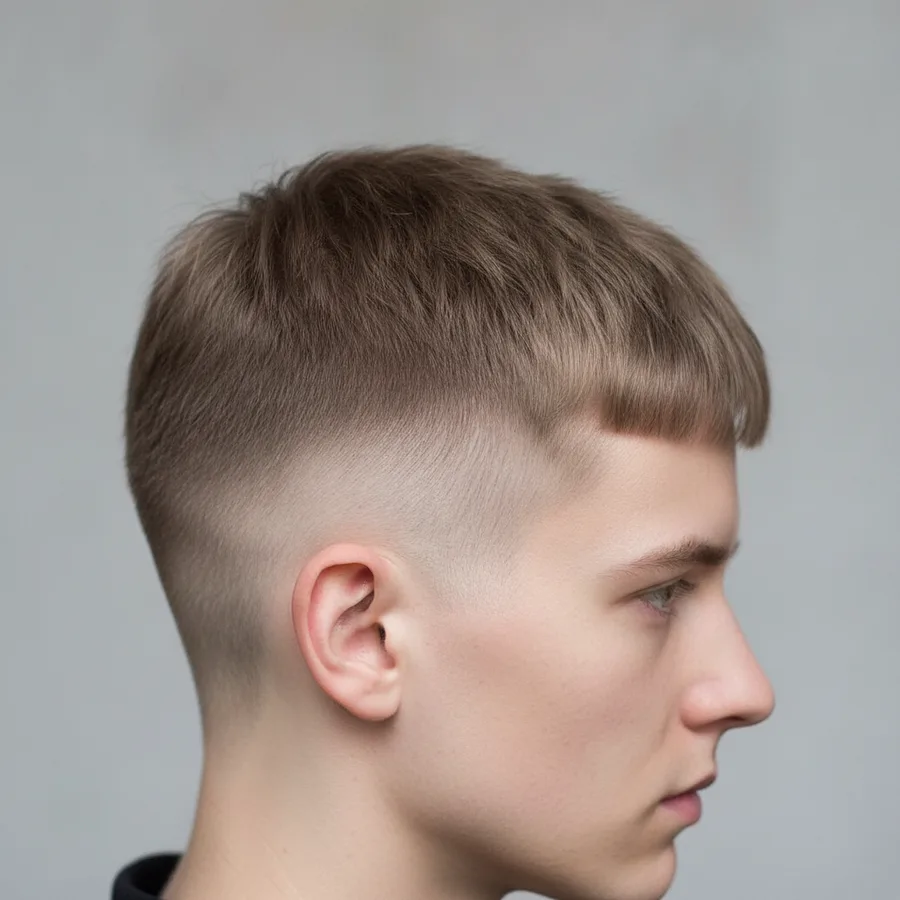
The crew cut keeps a little length at the front that tapers shorter toward the crown, with short sides. It's a sweet spot between a buzz and a proper style. There's just enough on top to give shape and a sense of hairline at the front, while the short crown means a thin spot back there barely registers. For a lot of men in their thirties, this is the cut that quietly solves the problem.
Buzz cut
When density drops far enough, the buzz cut stops being a compromise and becomes the strongest look available. Cutting everything to a uniform short length erases the contrast between full and thin areas entirely, because there's no length anywhere to compare. A crown that looks bare under length looks like an even, deliberate shadow when buzzed. It reframes thinning as a style choice, which it genuinely becomes. It also takes about five minutes to maintain and needs no product at all.
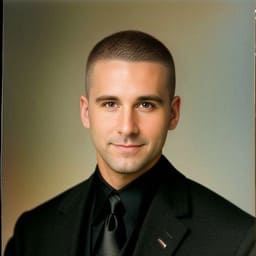
If you're weighing a buzz against everything else and can't picture it on yourself, that's exactly the decision worth testing before the clippers come out. You can preview a buzz, a crop, and a fade on your own face and see which one your head actually suits, rather than guessing from a photo of someone with a different hairline.
Products that fake density without looking wet
Styling makes or breaks a thin-hair cut, and the mistake most men make is reaching for shine. Anything glossy, wet-look, or heavy drags fine hair down and separates it into scalp-revealing strands. Matte and dry is the rule.
Volumizing shampoo cleans without the heavy conditioning agents that weigh fine hair down, so roots sit up instead of flat. Use it as your everyday wash rather than a rich moisturizing formula.
Sea salt spray roughs up the cuticle and adds grip and body, giving limp hair the texture it lacks. Spray on damp hair, scrunch, and let it air-dry or rough-dry with your fingers.
Matte pomade or a matte clay holds a textured top in place with zero shine, so the hair looks dense rather than slick. A pea-sized amount, warmed between your palms, is plenty. More than that and you're back to flat and greasy.
Texturizing powder is the closest thing to instant density. Tapped at the roots, it adds volume and grip and dulls any scalp shine. Use a light hand, because too much cakes and goes chalky.
The order matters. Sea salt spray on damp hair builds the foundation, powder at the roots lifts, and a small amount of matte product locks the shape. None of these should leave your hair looking crunchy or wet. If it does, you've used too much.
Talk to your barber before you commit
A good barber consultation is worth more than any single tip here. Bring up exactly where you're thinning, ask what fade length suits your hairline, and be honest about how much time you'll spend styling. A barber who sees your hair in person can tell you whether your crown can carry a crew cut or whether you're better off going shorter. They'll also steer you away from an undercut if your top can't support it.
Before that appointment, do the visual work yourself. A short cut is a commitment, and the fastest way to rule options in or out is to see them on your own features. You can test several cuts at no cost and narrow the field to two or three, then bring those to the barber instead of a vague idea. If you're also rethinking glasses or a cap to go with the new look, the wider try-on tools let you stack those on the same photo.
The short version
Fine-but-full hair wants texture and lift, so a textured crop or a careful side part gives it body. An early receding hairline responds to a French crop, a caesar, or a fade that blurs the edges. A thinning crown is best served short, with a crew cut or a buzz doing the most honest and lowest-effort work of all. Across every stage, keep it matte, keep it textured, and resist the urge to grow it out to hide the problem. Length is what makes thin hair look thin. Preview the cut first, then let the barber do the rest.