Low Maintenance Short Haircuts That Actually Hold Up
Tired of daily styling battles? These low maintenance short haircuts work with your texture and porosity so they fall into place with almost no effort.

You know the cut is wrong when your morning starts with a fight. Ten minutes with a round brush, a blast of dry shampoo by noon, a standing appointment every three weeks just to keep it from looking shaggy. A low-maintenance cut ends that. The idea is simple: shape the hair so it falls into place on its own, then let it grow without falling apart.
This is a guide to short and medium cuts that behave. Some are almost nothing to style. Others need a little product and a good trim schedule but nothing more. Every one of them can be previewed on your own photo before you commit, which matters when you're about to lose a lot of length.
What "low maintenance" actually means
Low maintenance is not the same as short. A cropped cut with a hard line and precise fade needs a barber every two weeks or it reads as unkempt. A slightly grown-out shag can go two months and still look intentional. The real question is how much daily effort and how many salon visits the shape demands.
Two things about your hair decide most of this. The first is texture: straight, wavy, curly, or coily. The second is porosity, meaning how readily your hair takes in and holds moisture. High-porosity hair drinks up product and can frizz fast; low-porosity hair sits wet longer and resists heavy creams. A cut that works with your texture and porosity dries the way you want with no tools. A cut that fights them will need a flat iron every single day, and that is the opposite of what you're after.
So the honest test of a wash-and-go cut is this: after a shower, can you towel off, add one product or none, and walk out looking like yourself? If yes, it's low maintenance for you. The same haircut can be effortless on one head and a daily project on another.
The short cuts
The pixie cut
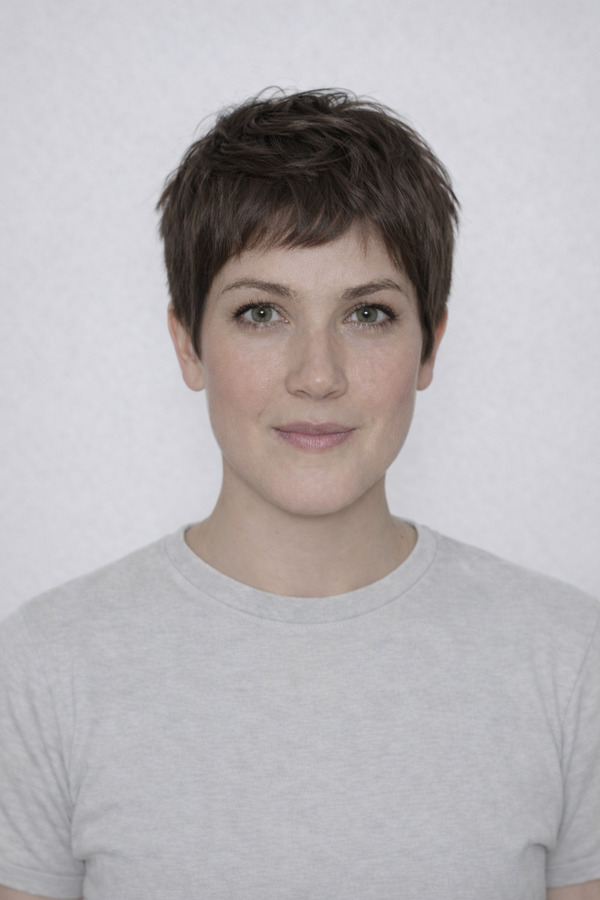
The pixie is the classic short crop: close at the nape and sides, a little more length up top to play with. It's the cut people reach for when they want to spend almost no time on their hair and still look styled. Done right, you rake a little product through the top with your fingers and you're done.
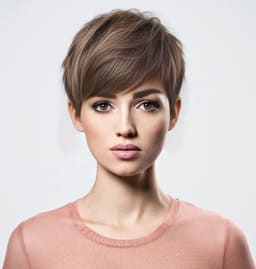
The catch is the trim schedule. A tight pixie loses its shape as the sides grow out, so it wants a visit roughly every four to six weeks. If you want to stretch that, ask for a slightly longer, softer version with less contrast between the top and sides. It grows out gracefully instead of turning into a helmet.
The buzz cut
Nothing is lower maintenance than a buzz. One length all over, or a gentle graduation from top to sides, clipped short enough that styling is not a concept that applies. No brush, no product, no bad hair days in the usual sense. You towel your head and leave.

The trade-off is frequency, not effort. Because the length is so short, even a week of growth is visible, so people who like the crispness go back often. If you'd rather not, let it grow a grade or two longer between cuts. A number three that drifts to a number five still looks deliberate. A buzz also exposes the shape of your head and hairline more than any other cut, which is exactly the sort of thing worth checking on a photo before the clippers come out.
The crop, the French crop, and the textured crop
The crop is a family, not a single cut. The base idea is short sides with a blunt or textured top that sits forward rather than swept back. It suits a lot of face shapes and needs very little in the morning.

The French crop keeps a short, straight fringe across the forehead and clean sides. It's tidy and a little sharp. The textured crop takes the same shape and breaks up the top with point-cutting, so it falls in separated pieces instead of a solid block. That texture hides growth, which is the real gift here: as it gets longer, it just looks fuller rather than overgrown.

For most people the textured version is the more forgiving of the two. A little matte paste worked through with your fingers, no comb, and it holds all day. If your hair is fine, the texture adds the appearance of density. If it's thick, it keeps the top from looking heavy.
The medium cuts
Short is not the only way to cut down on effort. Plenty of people want to keep some length, and the right medium cut can be just as easy as a crop. The trick is choosing a shape that doesn't depend on heat styling to look finished.

See any haircut on yourself
Upload one selfie and try on dozens of cuts and colours in seconds — before you commit at the salon.
Try a haircutThe bob
A bob sits somewhere between the chin and the collarbone, usually one clean length. It's a workhorse. A blunt bob has weight that helps it hang straight on its own, and a soft, slightly layered bob moves more and hides a cowlick or two. Either way, air-drying is a real option rather than a compromise.

If you want the lowest-effort version, ask for a length that clears your shoulders. Anything that just brushes the shoulder tends to flick out where it hits the fabric, and that's the thing that sends people back to the flat iron. Keep it above or well below that line and it behaves.
The lob, or long bob
The lob is a bob with more length, landing around the collarbone. It's the compromise cut for anyone who isn't ready to go truly short but is tired of the upkeep that comes with long hair. There's enough weight to keep it calm and enough length to tie back on the days you don't feel like dealing with it.
Long, soft layers keep a lob from looking flat without demanding any styling. On wavy hair it dries into a loose bend. On straight hair it hangs clean. This is one of the easiest medium-length options to live with, and it grows out for months without looking like it needs attention.
The shag
The shag is built out of layers and usually some fringe, cut to look a little undone on purpose. That's what makes it so forgiving. Its whole character is texture and movement, so it doesn't need to be neat to look right, and it looks better as it grows than when it's freshly cut.

For curly and wavy hair especially, a shag lets the natural pattern do the work. Scrunch in a little product, let it dry, and the layers spring up on their own. It's one of the best medium-length choices for someone who wants the look of effort with none of the effort, and one of the most reliable low-upkeep options for anyone holding on to length.
How to choose the one that fits you
Start with your texture and porosity, because they decide what a cut will do without tools. A few honest rules of thumb:
Curly and coily hair loves shape that works with the curl, so shags, textured crops, and softer pixies tend to win. Blunt, precise lines fight the pattern and need daily wrangling.
Fine, straight hair holds a blunt bob or a clean crop well, because the weight of a solid line gives it structure it doesn't have on its own.
Thick hair benefits from cuts that remove bulk: layered bobs, shags, and textured crops keep it from turning into a heavy dome.
High-porosity hair frizzes fast, so a cut with built-in texture disguises it better than anything smooth and sleek.
If your hair dries flat and slow, you likely have low-porosity hair, and lighter products in smaller amounts will serve you better than rich creams.
Then be honest about your patience. If you'll happily see a barber every two weeks, a tight buzz or a sharp French crop is on the table. If you want to disappear from the salon for two months, lean toward the shag, the lob, or a grown-out textured crop that only looks better with time.
Trims and growing it out
A common myth is that short hair means more trims. It depends entirely on the cut. A precise, contrasty short cut needs frequent tidying to stay precise. A soft, textured one can go much longer because there's no crisp line to lose. As a rough guide, expect a tight pixie or buzz to want attention every four to six weeks, a crop every six or so, and a bob, lob, or shag to hold for eight to twelve weeks before it starts to feel shapeless.
Growing out a short cut is where people panic and give up. The awkward stage is real, and it's shortest when your cut was designed to grow. This is the strongest argument for the textured, layered versions: a shag grows into a longer shag, a soft pixie grows into a crop and then a bob. Ask your stylist to cut with the grow-out in mind, then space your trims to shape the ends rather than chase the old length. The cut evolves instead of collapsing.
See it on yourself first
A haircut is one of the few style decisions you can't undo the next morning, which is exactly why it's worth previewing. Instead of scrolling through photos of strangers and hoping, you can put these cuts on your own face and see how a pixie sits against your jaw or whether a lob suits your neck.
Our hairstyle try-on lets you test any of these shapes on a photo of yourself before you book anything. If you're on the fence about going short, start with the free try-ons and compare a crop against a bob against a shag in a few minutes. It costs nothing and it settles the question that keeps most people in the wrong haircut for years: will it actually suit me?
Pick the shape that works with your hair, not against it, then choose a trim rhythm you'll actually keep. That's the whole formula. Do that and the ten-minute morning fight is over for good.