Haircuts at Shoulder Length: The Cuts Worth Asking For
Not every shoulder-length cut works the same way. See which haircuts at shoulder length actually hold shape, plus how to pick one for your face and hair type.

Shoulder length is the setting most people land on when they want their hair to feel like less work without going short. It's long enough to tie back, short enough to skip the ponytail-headache stage, and it reads as deliberate rather than grown-out. The catch is that a plain, one-length shoulder cut can go flat and shapeless fast, which is exactly why the version you choose matters more than the length itself.
This is a run-through of the cuts that actually work at this length, how to match one to your face and hair type, and what to ask for so you don't walk out with something heavier or blunter than you pictured. You can preview any of these on your own photo before you sit in the chair, which is the fastest way to kill the guesswork.
What counts as shoulder length
Anywhere from the collarbone to just brushing the top of the shoulder. The exact spot changes the whole feel. A collarbone-length cut sits an inch or two lower and gives you more to work with for waves and updos. A true shoulder-grazing cut flips out slightly where it hits the shoulder, which some people love and others fight every morning. Knowing which one you mean saves a lot of miscommunication at the salon.
The shoulder-length haircuts worth asking for
These are the shapes that hold up. Each one behaves differently, so read past the name to how it actually sits.
The lob
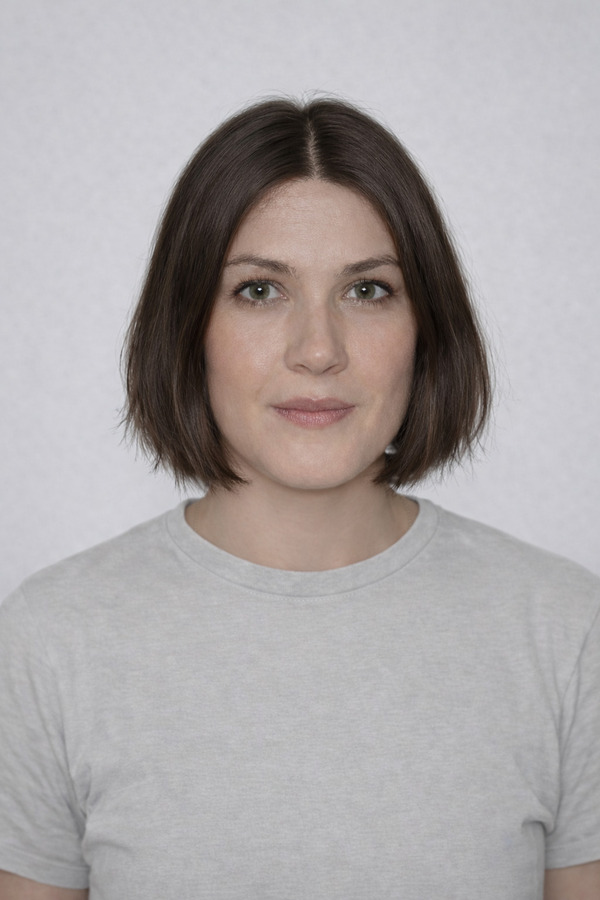
The long bob is the anchor of this whole category. It's a bob dropped to shoulder length, usually cut in a clean line with a slight angle toward the front so it frames the jaw. It looks polished with almost no styling, which is its main appeal. Straight or wavy hair both take it well, and it's the safest starting point if you're nervous about going shorter.
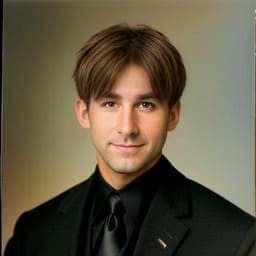
The blunt cut
One length, cut straight across, no internal layering. A blunt cut is the boldest choice here because it puts all the weight at the bottom, which makes fine hair look denser and gives thick hair a strong, graphic edge. The trade-off is movement. Without any layering it can sit like a curtain, so it rewards people with naturally straight or lightly wavy hair and a willingness to keep the ends sharp.
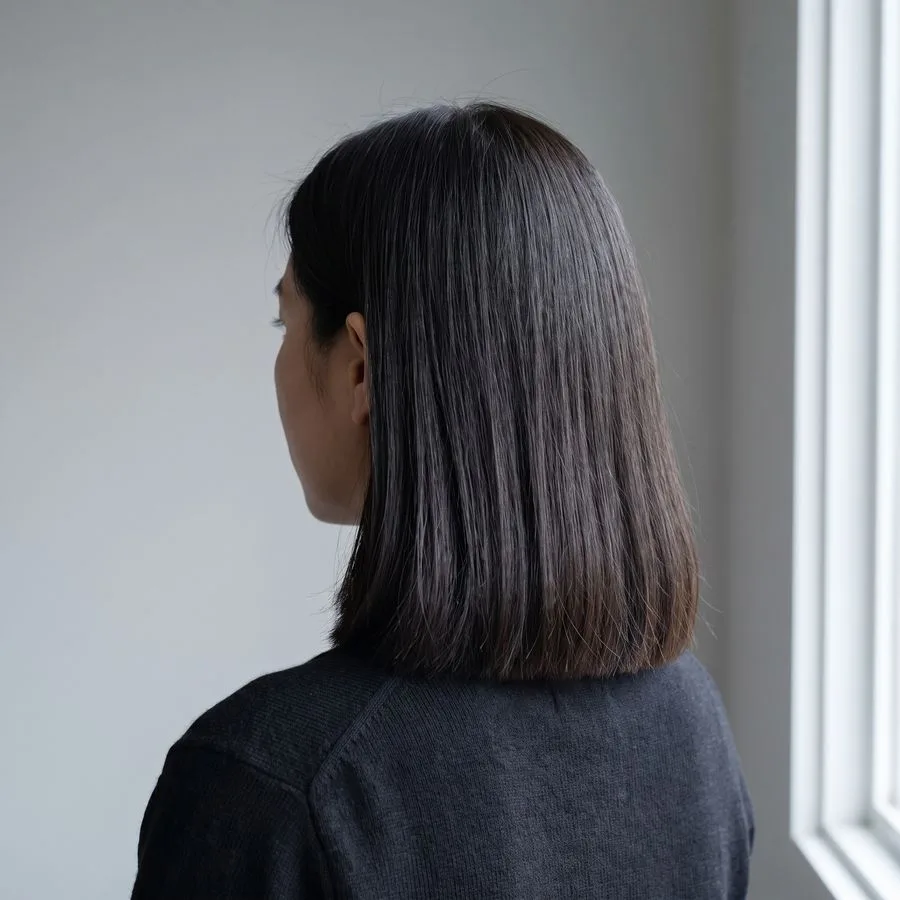
The shag
A shag is built on layers, lots of them, cut short at the crown and longer toward the ends to create a lived-in, tousled shape. Shag layers put volume up top and let the ends break apart on their own. It's the answer if your worry is looking too plain, because it never reads as flat. Wavy and curly hair especially thrive here since the layers give the curl somewhere to go instead of piling into a triangle.
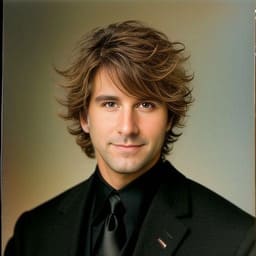
Textured layers
A softer cousin of the shag. Textured layers keep the overall length and outline intact but thin out weight through the mid-lengths and ends so the hair moves and bends. This is the middle ground for anyone who wants shape without the visible step-layers of a shag. It's also the most forgiving grow-out, since the layers blend back into one length rather than leaving an obvious line.
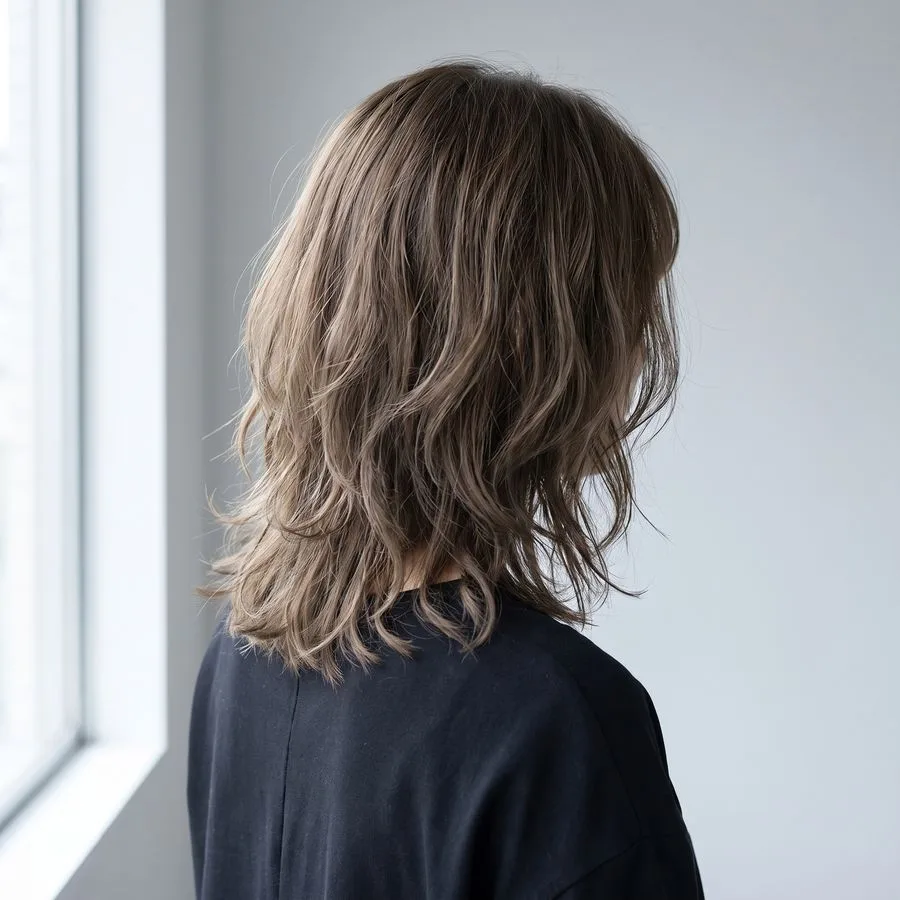
Face-framing layers with curtain bangs
Face-framing layers are the shortest pieces cut around the front to sweep along your cheekbones and jaw. Paired with curtain bangs, which part in the middle and sweep out to either side, they soften the whole front of a cut without committing to a full fringe. This combination flatters almost everyone because you control exactly where the shortest pieces land, and curtain bangs grow out gracefully into the rest of the layers.
Layers are the real decision
See any haircut on yourself
Upload one selfie and try on dozens of cuts and colours in seconds — before you commit at the salon.
Try a haircutAlmost every question about shoulder-length hair is really a question about layers. Do you want them, how many, and where. Layered shoulder-length haircuts move and hold volume. One-length shoulder-length haircuts look sleeker and heavier. Neither is better, but they demand different things from your hair and your morning.
Here's the short logic:
Fine hair, want volume: long, subtle layers keep the perimeter looking full while lifting the crown. Avoid heavy internal layering that thins the ends to wisps.
Thick hair, feels bulky: more aggressive layering removes weight so the hair doesn't puff out at the shoulders in a triangle.
Wavy or curly: layers give the curl room to spring; a blunt one-length cut on curls often expands sideways instead of falling.
Want low effort: fewer, softer layers grow out cleaner and need less styling to look intentional.
How the layers are cut matters as much as how many. Ask your stylist about point cutting, where the scissors are held vertically into the ends to soften a hard line and break up bluntness. For removing bulk deeper in the hair, slide cutting glides the scissors down the strand to taper weight gradually. Texturizing scissors, which have a notched blade, thin sections without changing the length, and they're what keep thick hair from looking like a solid block. If you like a sharp, dense finish, tell your stylist to go easy on all three.
Match the cut to your face shape
Shoulder length sits right around the jaw and chin, so it has an outsized effect on how your face reads. A few reliable pairings:
Face shape | What tends to work | Why |
|---|---|---|
Round | Long face-framing layers, curtain bangs, off-center part | Vertical lines and length at the front draw the eye down and slim the face |
Square | Soft textured layers, wispy ends around the jaw | Softens a strong jawline instead of echoing its angles |
Oval | Almost anything, including a blunt lob | Balanced proportions give you the most freedom |
Heart | Layers that build volume near the jaw, side-swept bangs | Adds width low down to balance a wider forehead and narrower chin |
Treat these as starting points, not rules. Your hair's density and how you part it shift the effect more than any chart can capture, which is the whole argument for previewing a shape on your own face before you commit.
Your hair type changes everything
Two people can ask for the identical cut and walk out looking nothing alike, because the raw material is different. Two variables do most of the work: density and porosity.
Fine versus thick. Fine hair wants weight kept toward the bottom, so a blunt lob or long, minimal layers make it look like there's more there. Thick hair wants weight removed, so texturizing and generous layers stop it from sitting like a helmet. If you have fine hair and love the shag look, ask for the shape without over-thinning the ends, or it'll go stringy.
Porosity. How readily your hair absorbs and holds moisture decides how it behaves after washing and how well styling lasts. High-porosity hair soaks up water fast, dries quickly, and can frizz, so it often holds a wave but needs sealing products. Low-porosity hair resists moisture, takes longer to dry, and can go limp under heavy products, so lighter formulas work better. Knowing which you have explains why a cut that looks great wet falls differently once it's dry.
Straight, wavy, curly: how it'll actually behave
A common worry is that shoulder length will misbehave on anything other than pin-straight hair. It won't, but the cut has to account for the texture. On wavy hair, expect the length to sit about an inch higher once it dries and springs up, so cut with that in mind. On curly hair, layers are close to mandatory. A blunt curly cut at the shoulder tends to widen into a triangle because the volume has nowhere to escape. Straight hair is the most predictable, which is why blunt cuts and clean lobs photograph so well on it, and why it needs a little layering or texture to avoid looking flat.
Color that flatters the length
Balayage suits shoulder-length hair particularly well. The hand-painted, gradual lightening reads as depth at the roots easing into brighter ends, and at this length you see the full transition without it disappearing down your back. On a layered cut, balayage catches the movement and makes the layers look more dimensional. On a blunt cut, keep the painting softer so it doesn't fight the clean line. Either way, it grows out with less of a hard regrowth line than all-over color.
Styling it at home
The reason shoulder length gets recommended so often is that it's fast to style. A round brush and a blow-dryer will give a lob its slight inward bend. For a looser, undone finish, flat iron waves are the workhorse: take a section, clamp near the root, and rotate the iron away from your face as you slide down, alternating direction section to section so it doesn't look uniform. Curtain bangs need only a quick pass with the round brush to sweep them off-center.
A short routine that covers most days:
Rough-dry to about 80 percent, lifting at the roots for volume.
Work in a light product suited to your porosity: sealing cream for high, weightless mousse for low.
Add bend with a flat iron or round brush, alternating the direction of waves.
Break up the ends with your fingers and a touch of texture spray so the layers separate.
Growing into it, or out of it
If you're coming down from long hair, shoulder length is a low-risk stop on the way, and layers make the transition look chosen rather than half-finished. If you're growing up from a bob, the awkward stage is the few weeks when the ends flip at the shoulder; texturizing and face-framing pieces disguise it until the length catches up. Either direction, a soft-layered cut grows out far more gracefully than a blunt one, because there's no single hard line to betray the regrowth.
The honest summary: shoulder length only looks plain if you cut it plain. Layers, face-framing, a shag or a textured finish all solve that, and the right pick depends on your face shape, your hair's density and porosity, and how much time you'll actually spend on it. Narrow it down to two or three shapes from the roundup above, then try each cut on your own photo so you're choosing based on your face instead of a stranger's.