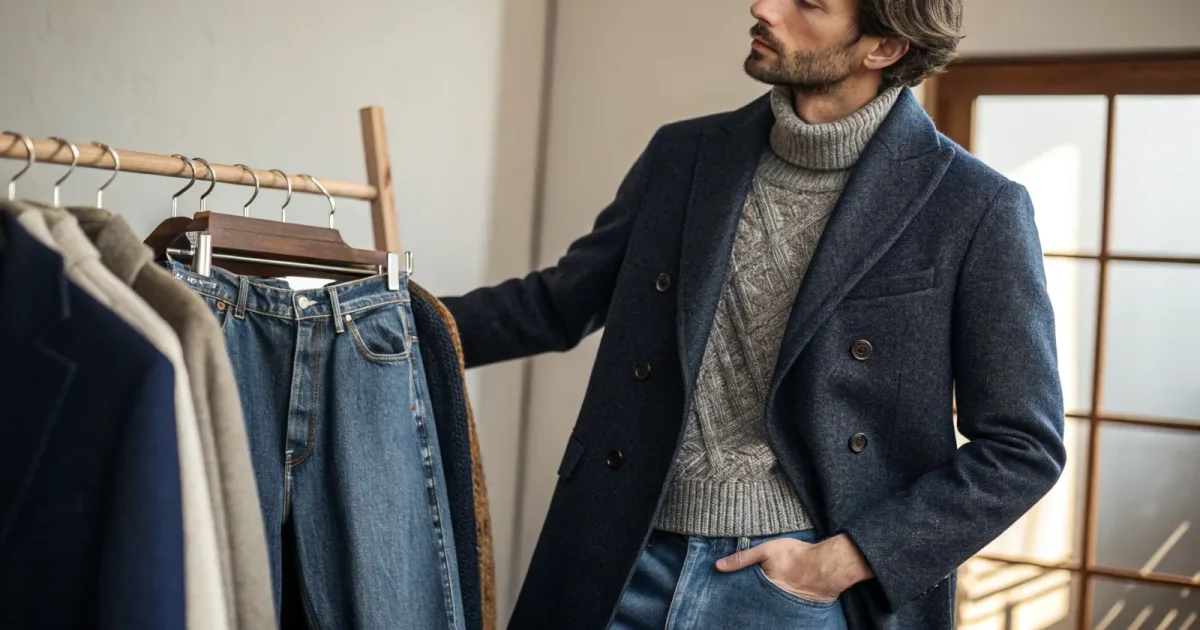
How to Build a Capsule Wardrobe on Amazon
Build a capsule wardrobe on Amazon without the return-label pile-up. Here's what to buy, how many pieces you actually need, and how to avoid fit gambles.
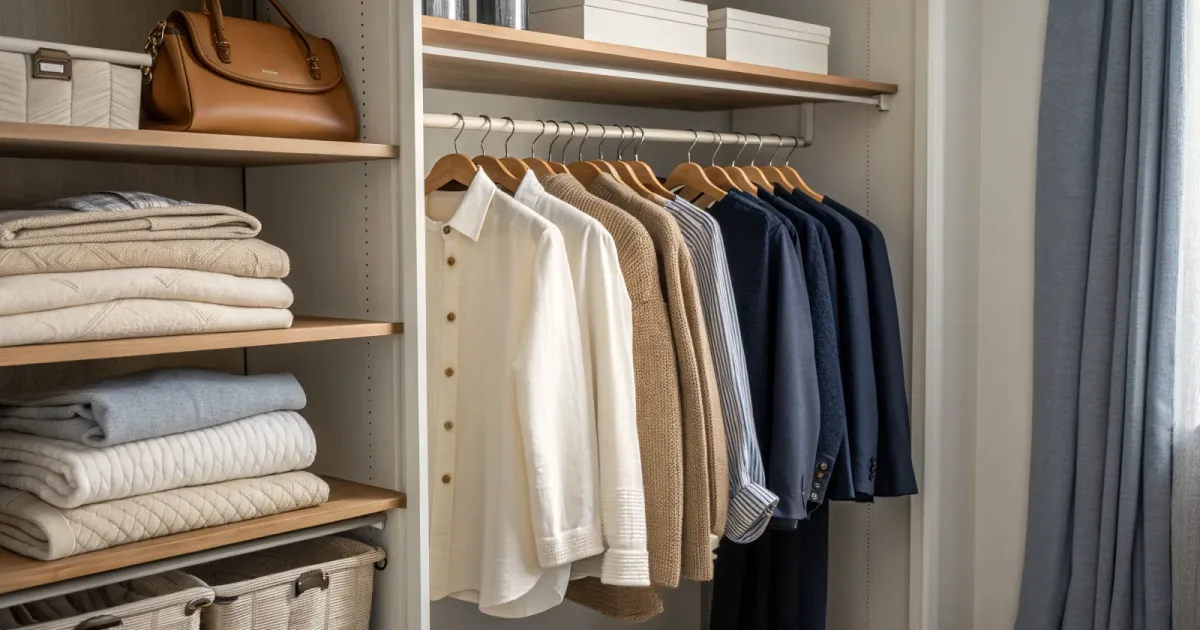
You want a closet that works every morning without a decision spiral, and you'd rather not spend boutique money to get there. Amazon is the obvious place to build it cheaply. The catch is obvious too: you can't feel the fabric or check how a trouser falls before it shows up at your door, so a "quick capsule haul" can turn into a pile of return labels. This guide fixes both problems. First, what a capsule wardrobe actually is. Then how to build one on Amazon without gambling on fit.
What a capsule wardrobe actually is
A capsule wardrobe is a small set of essential, non-seasonal clothes that mix and match with each other, topped up by a limited number of seasonal or trend pieces. That's the whole idea. The base stays put year-round, and you rotate a handful of items as the weather and your mood change.
The term isn't new marketing. It was coined in the 1970s by Susie Faux, who ran a London boutique called Wardrobe, to describe a collection of a few timeless pieces that don't fall out of fashion. The concept crossed the Atlantic in 1985, when designer Donna Karan built her 'Seven Easy Pieces' collection around a set of interchangeable core garments a woman could dress up or down. You can read the fuller history of both on the capsule wardrobe entry.
So when you see the phrase attached to a $19 Amazon tee, remember it started as a styling philosophy from a boutique owner and a major American designer. The price point changed. The logic didn't.
How many pieces? The honest answer
This is where people get stuck, because every guide cites a different number. Some say ten. Some say thirty to forty. The most famous version puts a hard cap on it: Project 333, created by Courtney Carver, asks you to dress with only 33 items for three months at a time, and that 33 includes clothing, accessories, jewelry, and shoes. You can see the full rules of Project 333 if you want a structured challenge to follow.
Here's how to think about it without agonizing. The number matters less than the ratio. Most of your closet should be quiet, repeatable basics that go with everything. A smaller slice should be seasonal or expressive pieces that make an outfit feel like yours. If you want a target, aim for somewhere around 30 to 40 total items per season, then tighten from there once you see what you actually reach for. If you want the discipline of a cap, use 33 and count your shoes and bags in it.
A capsule isn't about owning less for its own sake. It's about owning pieces that combine, so a dozen items produce dozens of outfits.
Building the base: neutral pieces that combine
The engine of any capsule is a neutral base. Black, white, navy, gray, camel, cream. Neutrals go with each other and with everything else, which is what lets a small number of pieces produce a large number of outfits. Loud prints do the opposite: a bold floral blouse pairs with maybe two things you own, so it earns its keep only as a deliberate accent.
For a women's capsule, a workable base looks something like this. Adjust for your life. Someone commuting to an office needs more tailoring; someone working from home needs more knits.
Two pairs of well-fitting trousers, one tailored and one relaxed, in black or navy
A pair of jeans in a wash you'll wear more than once a week
Three to four tops: a crew tee, a fitted long-sleeve, a button-down, a silky shell
One knit sweater and one cardigan you can layer
A simple day dress that works alone or over a tee
A blazer or structured jacket that pulls a casual outfit together
A skirt if you wear them, in a midi length that reads year-round
Notice the proportions are doing real work here. A 5'3" frame and a 5'10" frame want different rises, hem breaks, and sleeve lengths from the same "straight-leg trouser." Capsule advice that ignores this is how you end up with a technically complete wardrobe where nothing sits right. When you shop, read the model's height in the listing photos and the flat measurements in the size chart, not just the S/M/L label.
Why Amazon works for this, and where it bites
Amazon fashion is genuinely good for a capsule for one reason: basics are the easiest category to buy well at a low price. You are not chasing a runway silhouette. You want a clean crew tee, an honest pair of black trousers, a cardigan that isn't scratchy. Plenty of brands on the platform make those, and the reviews and photos from other buyers tell you more than a boutique tag ever will.
The bite is fit. You can't try anything on before it ships, and basics live or die on fit. A slightly boxy tee or a trouser that pools at the ankle won't get worn, and a capsule with unworn pieces isn't a capsule, it's clutter with a nicer name. This is the single biggest reason people abandon the whole project. They order twelve things, six don't fit, and the momentum dies in a stack of return boxes.
See it on yourself before it ships
This is the part that used to be impossible online and now isn't. Before you commit to a piece, you can put it on a photo of yourself and see how the length, the drape, and the color actually read on your body. It won't tell you the exact stretch of a waistband, but it answers the questions that drive most returns: is this the right length, does this neckline suit me, does this camel actually work against my skin, does the proportion make sense on my frame.
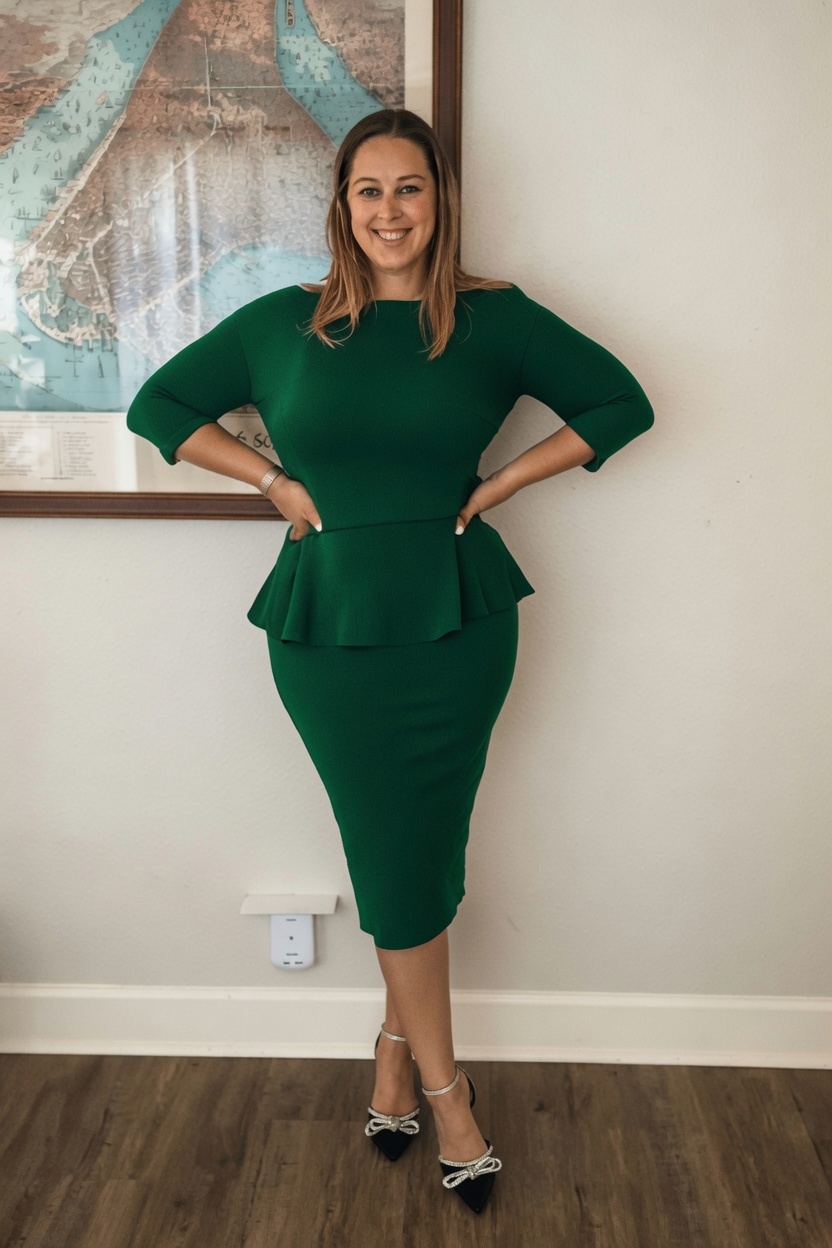
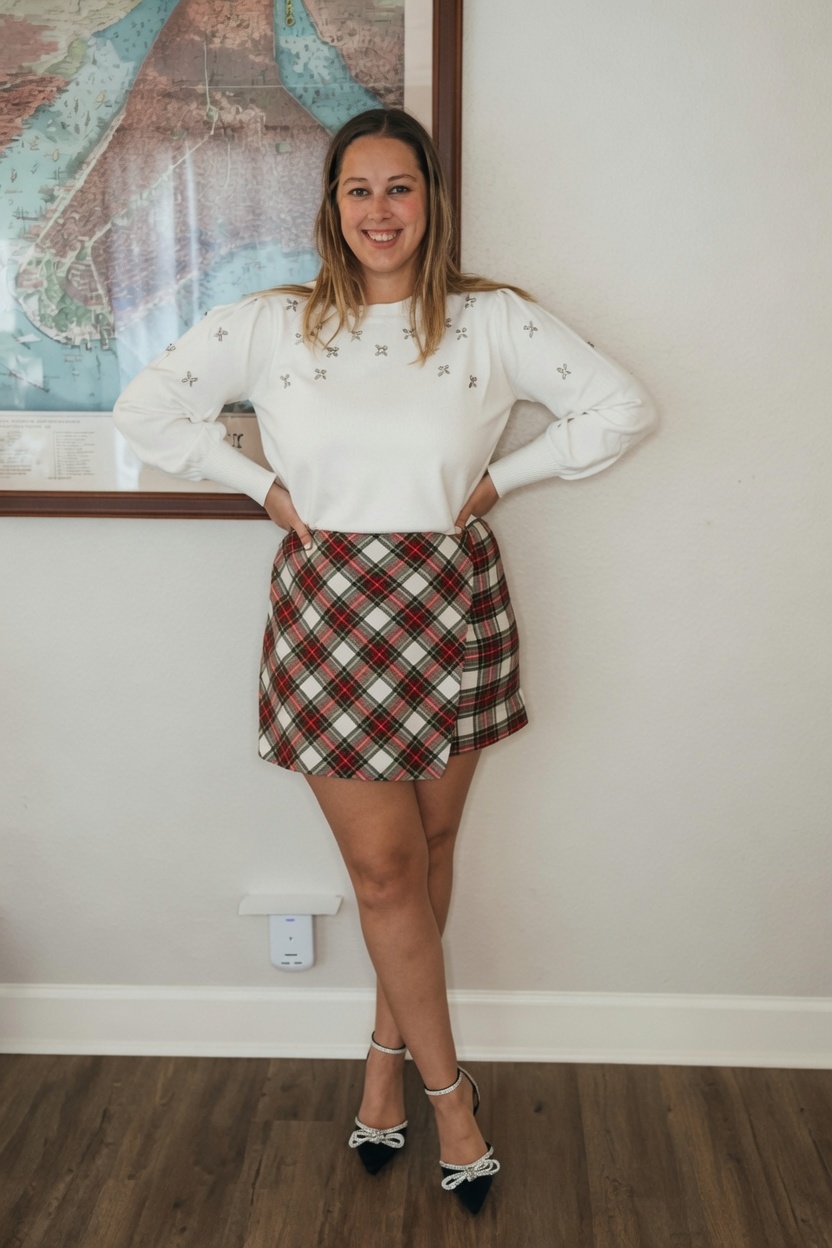
Try before you buy
Try on outfits, accessories and more on yourself in seconds — and save money and time on returns.
Try it onUse it as a filter. Try on the three tees you're torn between and keep the one that looks intentional rather than borrowed. Check that a midi skirt hits where you want it before you order two colors. The goal is to narrow your cart to pieces you already know work together, so what arrives is a wardrobe, not a lottery. You can try on clothing here and browse ideas over on the explore feed when you're deciding what to test next.
Seasonal swaps instead of a second wardrobe
A capsule doesn't mean wearing the same seven things through a heatwave and a cold snap. It means the base stays constant while a small seasonal layer rotates on top. Your black trousers, white button-down, and jeans work in February and July. What changes around them is thin.
For a seasonal capsule, keep the swaps tight:
Warm months: a couple of lightweight tees, a linen-blend shirt, sandals, a sundress
Cold months: a heavier knit, a coat, boots, a scarf, opaque tights
Shoulder seasons: a trench or light jacket, one transitional layer you'd wear both ways
When the season turns, box up what's out of rotation instead of leaving it in the closet. You see only what's in play, which is half the reason a capsule makes mornings faster. This is also where the earlier fit work pays off. Because your base is already dialed in, each season you're only vetting three or four new pieces, not rebuilding from scratch.
The decluttering pass that comes first
Before you buy anything, shop your own closet. Most people already own the bones of a capsule buried under things they don't wear. Pull everything out and sort into three piles: wear constantly, wear sometimes, never wear. The never-wear pile tells you what to avoid buying again, whatever tempted you the first time. The wear-constantly pile is your real style, and it's usually more consistent than you'd guess.
Only after that do you make a shopping list, and the list should be short. You're filling gaps, not restocking a store. This is the difference between minimalist fashion and just buying cheaper versions of a bloated wardrobe. The point of wardrobe decluttering is to stop the churn, not accelerate it.
The sustainability angle, honestly stated
A capsule and sustainable fashion overlap, but not automatically. Buying fewer, longer-lasting pieces and wearing each one more genuinely reduces churn. That's the good version. The bad version is ordering ten cheap items to "build a capsule," returning six, and repeating the cycle every season, which is worse than just buying carefully once.
So the sustainable move and the money-saving move are the same move: buy less, but buy it right the first time. Every return you avoid because you checked the fit ahead of time is a package that never had to travel back. A mix-and-match wardrome that you actually wear beats an aspirational one that sits folded.
A simple build order
If you want a sequence to follow rather than a vibe, here it is.
Declutter and identify what you already wear constantly.
Pick your neutral palette: two or three colors that already dominate your closet.
List the gaps between what you have and a working base of trousers, tops, a knit, a jacket, a dress.
Try each candidate on virtually and cut anything the length or proportion doesn't flatter.
Order the survivors, in your real measured size, not your assumed one.
Add three or four seasonal pieces on top, and box the off-season ones away.
That's the entire method. It scales down to a strict 33 if you want the challenge, or up to a looser 40 if your life needs the range.
The takeaway
A capsule wardrobe is an old, well-tested idea: a few timeless pieces that combine, from Susie Faux's London boutique to Donna Karan's seven easy pieces to Courtney Carver's 33. Amazon just makes the base pieces cheap and easy to source. The only real obstacle is fit, and you can now check that before you buy instead of after it arrives. Build the neutral base, keep the seasonal layer thin, try things on your own frame first, and you'll spend less money, make fewer returns, and get dressed faster. That's the whole promise, and it holds.