How to Style an Outfit With Jeans and a Blazer
A jeans-and-blazer outfit can look sharp or sloppy depending on fit and details. Here's how to get the balance right every time you wear one.
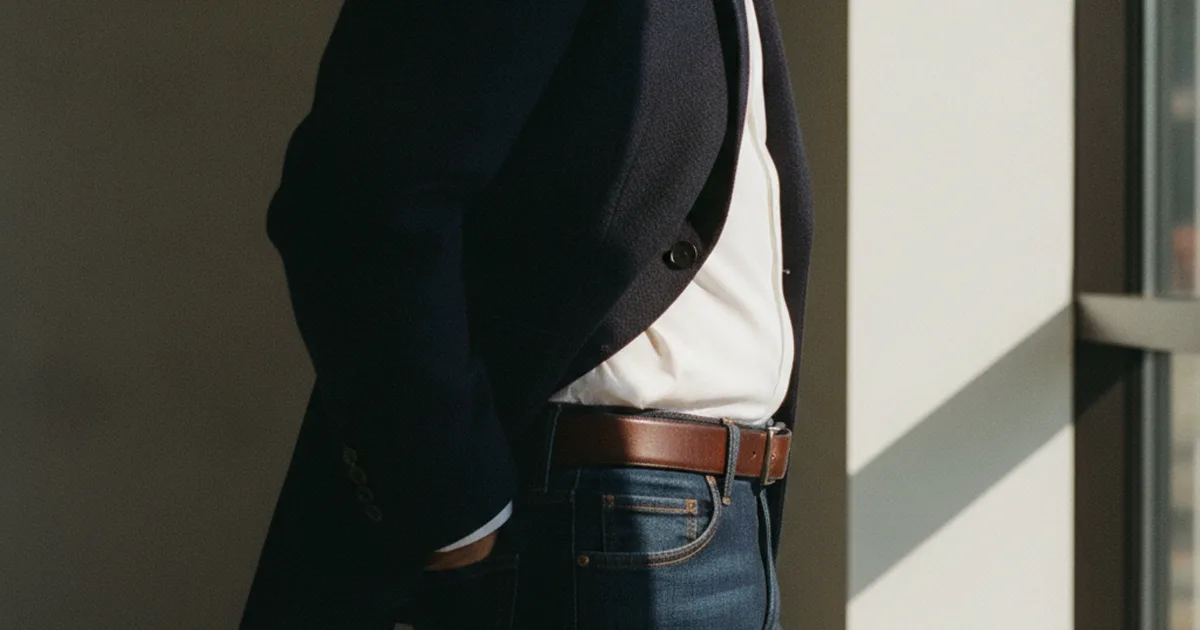
A blazer with jeans is the outfit most men reach for when the dress code says nothing useful. It works for a dinner, a Friday at an office that dropped its tie rule, a first date, a gallery opening you got dragged to. It also goes wrong more often than any other combination, because the two halves come from different worlds. Get the balance right and you look deliberate. Get it wrong and you look like you threw a suit jacket over your weekend clothes.
This is a guide to every version of that question, whether you typed it as jeans and blazer, blazer with jeans, or just blazer. The rules are the same. The details are where people trip.
Start with the blazer, not the jeans
Most people already own the jeans. The blazer is the piece that decides whether the outfit reads smart casual or sloppy, so choose it first. The single biggest fit rule: the shoulder seam should sit where your shoulder ends, not past it. Everything else can be tailored. A shoulder that hangs off cannot.
Length matters just as much. A blazer worn with jeans should be a touch shorter than a formal suit jacket, ending around the base of your seat so it doesn't swamp the casual half of the outfit. Sleeves should show a little shirt cuff, or none at all if you're going sleeves-rolled with no jacket cuff showing.
Structured, unstructured, single, double
A single-breasted blazer is the default and the easiest to wear with denim. One or two buttons, clean lines, works with almost any jeans you own. A double-breasted blazer is a stronger statement and leans dressier; it can look excellent over dark jeans but needs confidence and usually a slimmer trouser to keep the proportions from going boxy.
The other axis is structure. A structured blazer has padding and canvas in the chest and holds a sharp shape. An unstructured blazer skips most of that, so it drapes soft like a heavy shirt. For jeans, the unstructured blazer is often the smarter buy. It bridges the gap between tailored and casual without the stiffness that makes a jacket look borrowed from a suit.
Why a suit jacket is not a blazer
This trips up more people than anything else. A suit jacket and a blazer are not interchangeable, and the difference shows the moment you pair either with jeans. A suit jacket is cut from fine, smooth suiting cloth and built to match its trousers. Orphan it from those trousers and it looks exactly like what it is: half a suit, missing its other half. The fabric is too refined next to denim, and the sheen gives it away.
A blazer is designed to stand alone. It comes in sturdier, more textured cloth, often with patch pockets and horn or metal buttons, and it expects to be worn with something that isn't its twin. If you only own suit jackets, buy one real blazer before you build this outfit. It's the difference between looking intentional and looking like you got half-dressed.
Choosing the jeans
Slim-fit jeans and straight-leg jeans both work under a blazer; skinny and baggy generally don't. Slim-fit keeps the line clean and dressy, which suits a structured or double-breasted blazer. Straight-leg reads a little more relaxed and modern, and it pairs well with an unstructured jacket and a chunkier shoe. Whichever you pick, the leg should break cleanly at the shoe without a pile of extra fabric bunching at the ankle.
Then there's the wash. A dark, even indigo with little fading is the most versatile and the easiest to dress up. Mid-blue reads more casual. Heavy fading, rips, and whiskering pull the whole outfit down toward streetwear, which is fine if that's the goal but works against a blazer's formality. Black jeans deserve their own note, coming up next.
Color combinations that actually work
A navy blazer is the workhorse, and the question people ask most is whether to put blue jeans or black jeans under it. Both work. Blue jeans with a navy blazer read classic and slightly softer, good for daytime and relaxed settings. Black jeans with a navy blazer are sharper and more evening-appropriate, and they photograph well under artificial light, which is why they suit a work dinner or a semi-formal event better than mid-blue denim would.
Beyond navy, a few reliable pairings:
Grey blazer with dark blue jeans: quiet, professional, hard to get wrong.
Olive or tan unstructured blazer with mid-blue jeans: relaxed weekend smart casual.
Charcoal blazer with black jeans: monochrome and modern, best kept matte to avoid looking like a suit.
Brown or check blazer with indigo jeans: warm, textured, good for autumn.
The general principle: let one half be the plain anchor and the other carry any pattern or texture. A checked blazer wants plain jeans. Patterned or heavily faded jeans want a solid blazer.
The denim-on-denim question
Some people want a denim blazer or denim-style jacket over their jeans, and that opens a specific trap. According to GQ's styling advice, you should avoid matching the exact same wash of blue top and bottom, or you'll look like you're wearing a matching denim set rather than an outfit. Unless you're deliberately going for the Canadian tuxedo, keep a clear contrast between the two washes: a lighter jacket over darker jeans, or the reverse. The gap between the shades is what turns two pieces of denim into a considered look instead of an accident.
What to wear underneath
The shirt or knit under the blazer sets the register of the whole outfit. A crisp oxford shirt, collar open, is the safest and most useful option; it holds a collar shape without a tie and dresses the outfit up or down depending on your shoes. A fine-gauge turtleneck swaps in beautifully for cold weather and evening, adding a bit of polish that reads more intentional than a t-shirt ever will.
A plain t-shirt or a lightweight crewneck knit takes the same blazer fully casual for a daytime or weekend look. What to avoid: loud logo tees, anything with a stiff formal collar meant for a tie, and heavy hoodies that fight the jacket's shape.
Shoes: the decision that changes everything
Footwear does more to set the tone than any other single choice, which is why so many people get stuck here. Same blazer, same jeans, three completely different outfits depending on what's on your feet.
Clean white or minimal leather sneakers: the most casual, best for daytime, drinks, and relaxed offices. Keep them tidy; scuffed trainers undo the blazer.
Loafers: the smart-casual sweet spot. A pair of penny or suede loafers dresses jeans up instantly and works for dinner, dates, and business casual settings.
Chelsea boots: sleek, weather-friendly, and slightly rugged. They lean into the casual side of the outfit while still looking pulled together, and they're ideal in autumn and winter.
Derbies or brogues: the dressiest end, good when you want the jeans-and-blazer look to pass at a semi-formal event.
Match the formality of the shoe to the occasion, then let the rest of the outfit follow. Sneakers with dark jeans and a navy blazer is a genuinely versatile combination that covers most of what people mean by smart casual.
Try before you buy
Try on outfits, accessories and more on yourself in seconds — and save money and time on returns.
Try it onDressing for the occasion
Business casual and the office
For an office that allows denim, keep everything at the sharper end: dark or black jeans with no fading, a structured navy or grey blazer, an oxford shirt, and loafers or clean derbies. This is where black jeans earn their place, since they read closer to trousers than blue denim does. Skip the sneakers here unless you already know the room is relaxed.
Date night and dinner
Lean into contrast and a little texture. A navy or charcoal blazer, dark slim jeans, a turtleneck or open oxford, and Chelsea boots or loafers. This reads considered without looking like you're trying to impress a boardroom. The turtleneck in particular does a lot of work after dark.
Genuinely casual
An unstructured blazer over a t-shirt or light knit, mid-blue straight-leg jeans, and white sneakers. This is the version people worry looks too try-hard, and the fix is softness: an unstructured jacket, casual footwear, and no tie signal that you dressed up on purpose but didn't overthink it. If you want to swap the denim entirely, a pair of chinos under the same blazer gives you a slightly dressier alternative that carries the identical logic.
Common mistakes
Most bad versions of this outfit fail in one of a handful of predictable ways. Run through this list before you leave:
Wearing an orphaned suit jacket instead of a real blazer. The fabric always gives it away.
Matching your denim jacket and jeans to the same wash when you didn't mean to do the Canadian tuxedo.
Jeans that are too faded or too distressed for the formality of the blazer.
A blazer with shoulders that don't fit; no styling fixes this.
Dressy shoes with sloppy jeans, or scuffed sneakers with a sharp blazer. Keep the two halves at the same level of care.
Overloading the outfit with a pocket square, tie, and dress shoes all at once, which pushes jeans back toward looking like the wrong half of a suit.
Putting it together
The whole outfit comes down to one idea: a blazer and jeans work when the two halves meet in the middle. Dress the jeans up with a dark wash and a clean shoe, or dress the blazer down by choosing something unstructured, and let the shirt and footwear fine-tune the rest. Once you've settled on a combination that suits you, it's worth seeing how the proportions read on your own frame before spending anything. You can try the pieces on virtually to check the blazer length and jeans break, use a free try-on if it's your first time testing the tool, and then browse specific blazers and jeans once you know what works. The outfit is simple. Getting the details right is what makes it look easy.