2026 Haircut Trends for Women, Sorted by Length
The 2026 haircut trends female searchers actually want, broken down by length with notes on face shape, texture, and upkeep before you book the chair.

You've saved a photo of a haircut you love. Now you're staring at it wondering whether it'll still look current when you walk out of the salon, and whether it'll sit the way it does on the model or fight your hair the whole way home. That's the real question behind every trend search: not what's popular, but what's popular and going to work on your face and your texture.
So here's a roundup of the cuts shaping 2026, organized the way people actually shop for them. By length. Short, bob, medium, long. Each one comes with a note on who it flatters and how much upkeep it demands, and you can try any of them on your own photo before you commit to scissors.
Start with your face shape and texture, not the trend
A cut that's everywhere on your feed can still be wrong for you, and the reason is almost always one of two things: face shape or hair texture. Get those straight before you book anything.
Face shape governs where a cut adds width and where it draws the eye. Round faces usually want length and vertical lines to slim the frame; square jaws soften under movement and soft edges; long faces balance out with width around the cheeks, often from bangs or layers that stop at the chin; heart shapes tend to like volume near the jaw to offset a wider forehead. None of this is a rulebook. It's a starting point you can break on purpose.
Texture decides whether a cut behaves. A blunt, heavy shape reads sharp on straight hair and turns into a triangle on coarse curls. A choppy, layered cut that looks effortless on wavy hair can fall flat on fine, poker-straight strands without product. Before you fall for a look, ask what texture it was cut for. If it doesn't match yours, ask your stylist how they'd adapt it, or whether they'd steer you somewhere else.
Short hair: pixie and bixie
Short is having a real moment, and the appeal is obvious once you've done it. Less time under the dryer, a shape that looks intentional instead of grown-out, and a cut that puts your face front and center.
The modern pixie
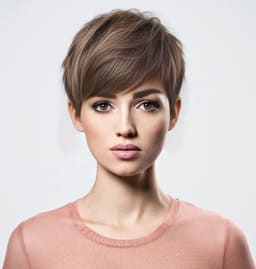
The pixie is back in a softer form than the severe crops of years past. Think longer on top with piecey texture you can push around, tapered but not shaved at the sides, and enough length to style two or three ways. It suits strong features and works beautifully on fine hair, where cutting away length actually reads as more volume, not less. If your hair is very thick or tightly curled, ask for extra internal layering so it doesn't sit high and boxy.
The bixie
The bixie is the middle ground people keep asking for: part bob, part pixie. It's a fraction longer than a classic pixie, with layers through the crown and a bit of weight left at the nape and around the ears. That extra length makes it far more forgiving if you're nervous about going properly short, and it grows out gracefully into a bob rather than an awkward in-between. For anyone testing the waters of short hair, this is the one to try on first.
Bobs: blunt, classic, and everything between
The bob is the most searched, most argued-over cut every year for a reason. It flatters almost everyone with the right adjustment, and small changes to length and weight swing the whole mood of it.
The blunt bob
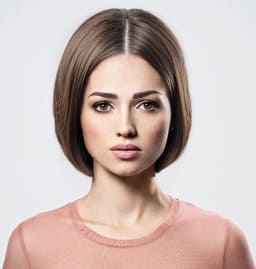
A blunt bob is cut to one clean length with no layers, so all the weight sits at the bottom edge. It looks expensive and deliberate, and it makes fine or straight hair read thicker because the ends stay dense. The trade-off is honesty: a blunt line shows every bit of damage and every missed trim, so it wants healthy ends and a salon visit roughly every six to eight weeks. On wavy or curly hair, a true blunt bob can balloon, so ask for a soft internal graduation to keep the shape without losing the crisp edge.
The soft, layered bob
If a blunt line feels too severe or your hair is too thick to carry it, a layered bob does the opposite job. A few internal layers remove bulk, add movement, and let the ends flick out or tuck under depending on how you dry it. This is the bob for curly and coarse textures because it works with the volume instead of fighting it. Length is the lever here: a chin-grazing bob draws attention to the jaw and cheekbones, while a collarbone-length version lengthens a round or full face.
Worried a bob will just look like a bob no matter what you do? The difference between styles is mostly in the details you can't see in a thumbnail: where the shortest layer sits, whether the perimeter is blunt or soft, how much the front pieces are angled. This is exactly the kind of decision worth previewing on your own photo before you're in the chair, because a bob on a model tells you very little about a bob on you.
Medium length: where the trend energy is
Mid-length is doing the heavy lifting in 2026. It's long enough to tie back, short enough to feel current, and it's the natural home for the layered, textured shapes everyone's asking for.
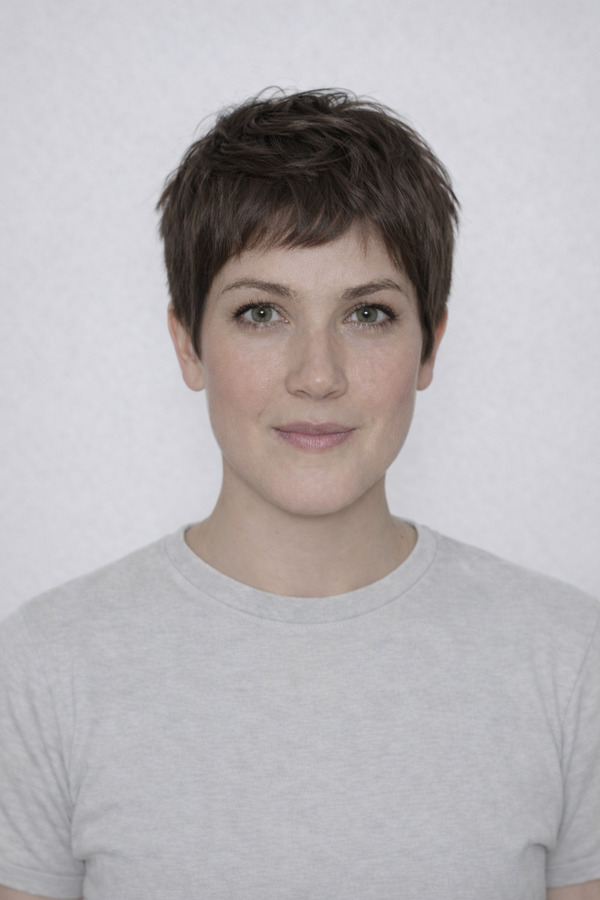
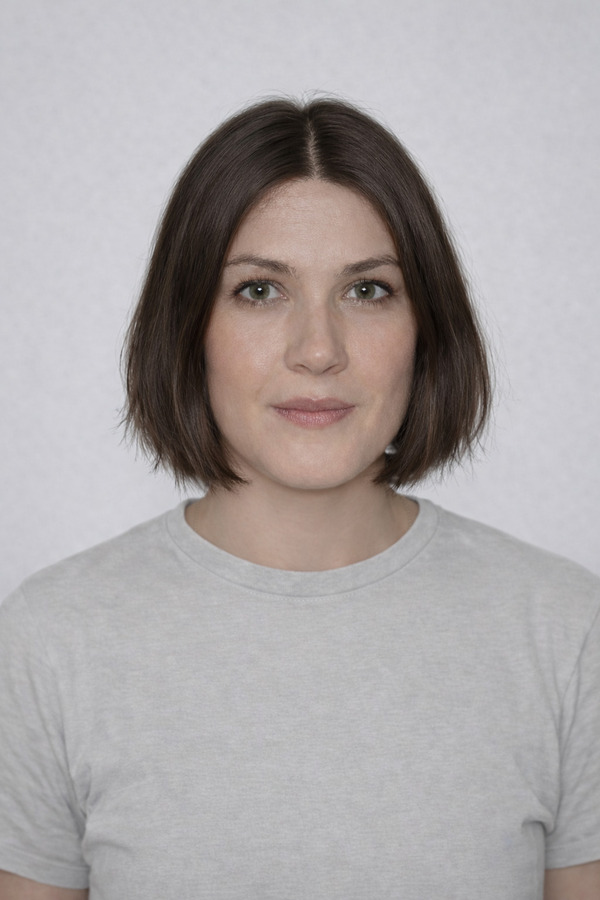
See any haircut on yourself
Upload one selfie and try on dozens of cuts and colours in seconds — before you commit at the salon.
Try a haircutThe shag
The shag is built on layers stacked from the crown down, with a feathered, lived-in finish. It's messy on purpose, and that's the point: it gives fine hair the illusion of volume and gives thick hair somewhere to put its bulk. Waves and natural texture love a shag because the layers make movement look effortless. Dead-straight hair can wear it too, but you'll need to encourage a little bend with product or a quick round-brush so the layers don't hang limp.

The wolf cut
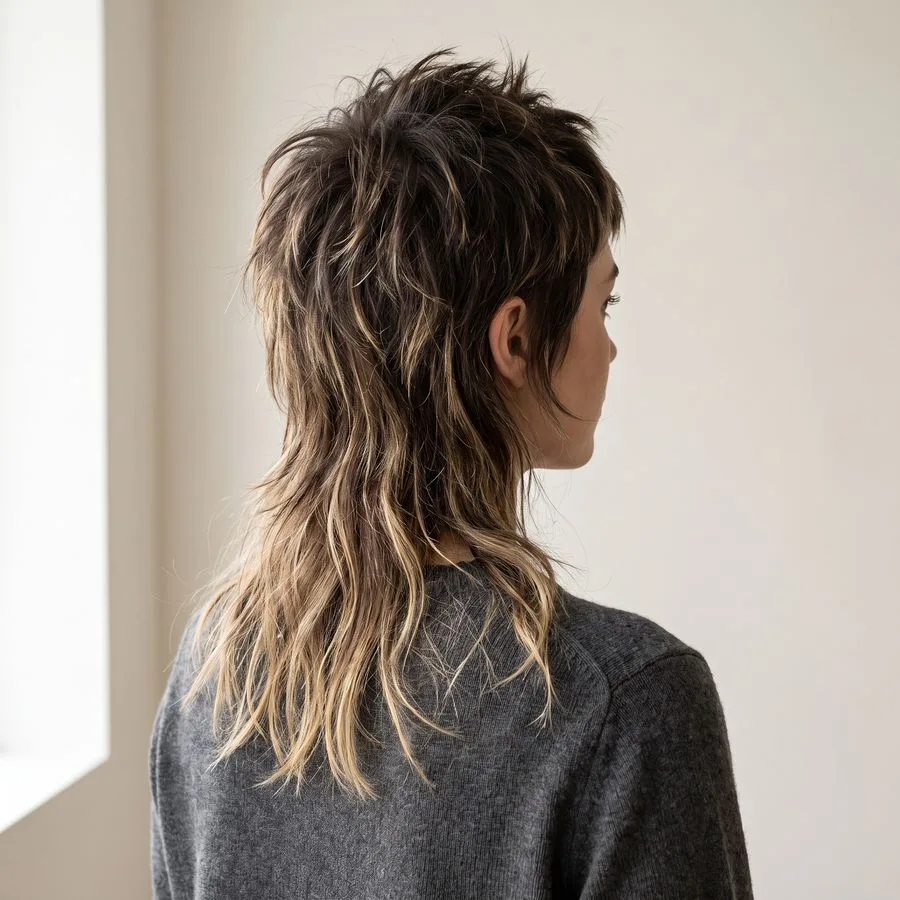
The wolf cut takes the shag and pushes it further, marrying it to that pixie-like short, spiky crown. The top is cropped and choppy, the length underneath stays long, and the contrast between the two is the whole look. It's bold, it's high-drama, and it reads best on people who don't mind a bit of edge in their day-to-day. Coarse and wavy hair handles it easily. If your hair is fine, keep the disconnection subtle so the shape doesn't look sparse on top.
The butterfly cut
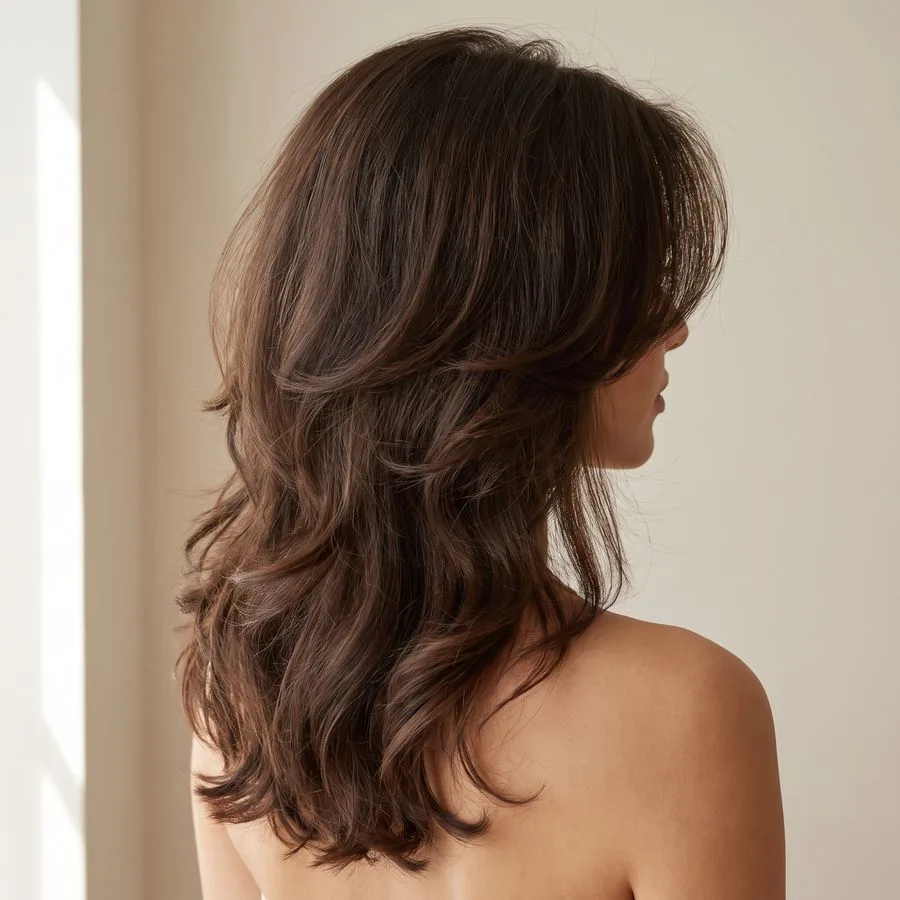
The butterfly is the gentler cousin of the shag and wolf. It uses two tiers of layers, a shorter set that frames the face and falls around the collarbone, and a longer set that keeps your overall length intact. The effect is big, bouncy, blown-out volume without actually cutting much length off. It's the safe way to get the layered look if you're protective of long hair, and it flatters almost every face shape because you control where the shortest face-framing pieces land.
Curtain bangs and face-framing layers
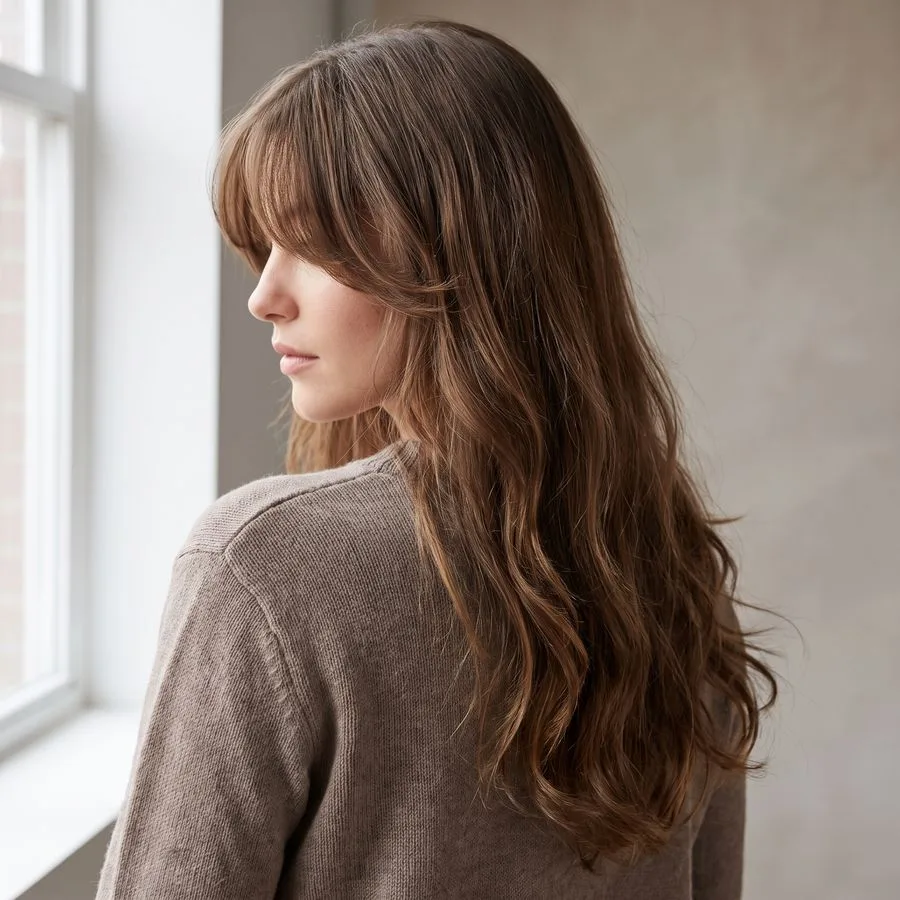
Not ready to lose length at all? Bangs and framing do most of a haircut's flattering work with a fraction of the commitment. Curtain bangs part in the middle and sweep back toward the cheekbones, softening a long or square face and blending out as they grow, so there's no blunt regrowth line to manage. They pair with everything on this list.
Face-framing layers are the subtler version: longer pieces cut around the front to trace your jaw and cheekbones without a full fringe. They're the lowest-risk change here. If a full cut feels like too much, this is where to start, and it's an easy way to test whether shorter pieces around your face suit you before you go all in on a shag or a bob.
Long hair that still looks current
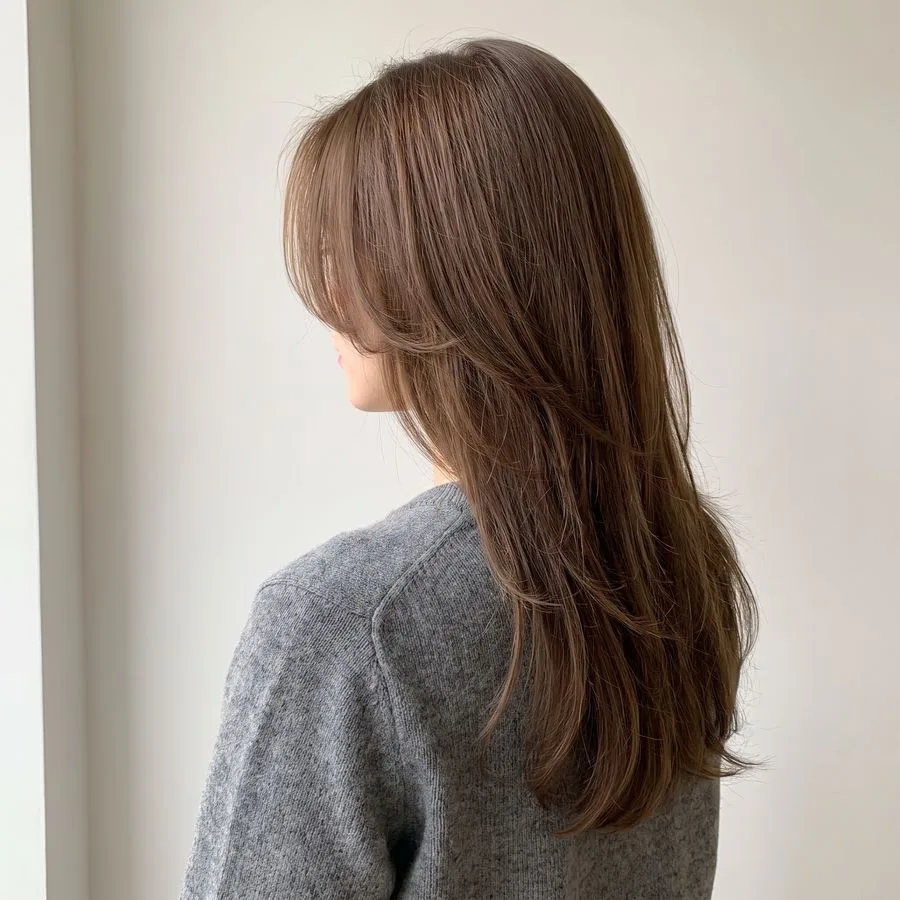
Long hair isn't going anywhere, but the flat, one-length, all-over-the-same look feels dated next to everything above. The fix is texture. Long layers cut through the mid-lengths and ends keep the length while adding movement, so it swings instead of hanging like a curtain. Add curtain bangs or face-framing pieces and you've got a long cut that reads 2026 without sacrificing an inch you don't want to lose.
The thing to avoid is length for its own sake. Ends that are thin, stringy, or split undercut the whole look, and no layering fixes damaged hair. If your ends are struggling, a shorter, healthier cut will always look more current than long hair that's running on fumes.
Matching the cut to your upkeep, not just your face
Every cut here comes with a maintenance bill, and it's worth being honest about yours before you book.
Short cuts like the pixie and bixie look sharpest fresh, so they need a trim roughly every four to six weeks to hold their shape. The daily styling is quick, but the salon visits are frequent.
Blunt bobs live and die by their clean edge, so plan on a cut every six to eight weeks and accept that grown-out ends will show.
Layered cuts, shags, wolf cuts, and butterflies are the most forgiving as they grow, because the layers blur the regrowth. You can stretch these longer between trims.
Bangs of any kind need the most attention of all. Expect a fringe trim every two to four weeks, whether you do it yourself or pop into the salon.
Pick the cut you'll actually maintain, not the one you'll admire for three weeks and resent for the next six. A slightly less dramatic shape you keep up looks better than a bolder one you let slide.
Try before the chair
The single biggest gap in every trend roundup is that the cuts sit on someone else's head. A shag on a model with wavy hair and sharp cheekbones tells you nothing about a shag on you. That's the whole reason to preview a shape on your own face first, so you can see how the length hits your jaw, whether bangs crowd your features, and whether short actually suits you before it's irreversible.
Take the cut you've been eyeing, put it on your own photo, and compare it against one or two alternatives from a different length. It's the fastest way to turn a vague trend anxiety into an actual decision you can walk into the salon and ask for.