Pirate Outfit Accessories That Sell the Costume Instantly
Skip the plastic overload. These pirate outfit accessories—hat, sash, and hardware—turn a plain black outfit into a costume that actually reads.
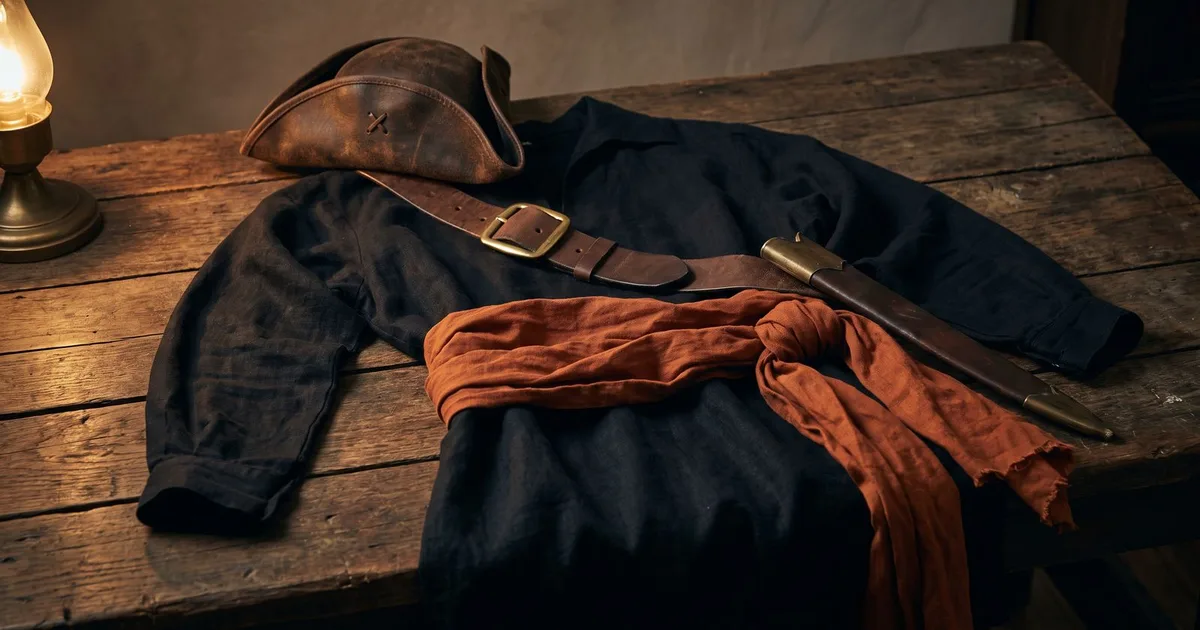
You already own the black outfit. What you don't have is the two or three pieces that turn it into a pirate, a witch, or a cat by the time you leave the house. That's the real question behind most costume searches: not a full kit from a bag, but the short list of accessories that make an outfit read as the character without looking like you rented it.
This is a checklist first and a styling lesson second. Each costume below gets its non-negotiable pieces, plus a note on where the signature item actually comes from so you're not just piling on plastic. At the end, the same logic that stops a costume looking cheap will help you accessorize anything you wear on a normal Tuesday.
Pirate: three pieces do the work
The pirate is the most forgiving costume on this list because so much of it is silhouette. A loose white shirt and dark trousers or a full skirt is already halfway there. What sells it is the headwear and the hardware.
The tricorne, that three-cornered hat, wasn't invented for buccaneers. It was mainstream European and colonial fashion, worn by soldiers and civilians alike from roughly the 1690s to about 1800. It reads as pirate now because the era and the myth grew up together. If a tricorne feels like too much commitment, a red or black bandana knotted at the back of the head does the same job for less.
Tricorne hat or a knotted head bandana
Eyepatch (one, worn on either eye)
Wide fabric sash tied at the waist over the shirt
A cutlass prop tucked into the sash
Gold hoop earrings
Knee-high boots with a folded or slouched cuff
The gold hoops matter more than people expect. They catch light near your face and pull the whole look together, which is exactly what a focal accessory is supposed to do. If you want to see how a bold hoop sits against your own face before committing, our jewelry try-on is built for that.
Skip the full plastic costume if you can. A billowing shirt you already own plus a sash, a patch, and hoops will always look better than a shiny two-piece set. And if you're going all in on the theme for a party, a small Jolly Roger flag makes a good prop or backdrop. That skull-and-crossbones was flown by real pirate captains during the early 18th-century Golden Age of Piracy, so it's period-accurate shorthand rather than pure invention.
Police: authority lives in the hat and the belt
A police costume is a study in restraint. Overdo it and you look like a stripper-gram; underdo it and you're just a person in navy. The trick is to concentrate the detail at the head and the waist and keep everything in between plain.
The British version leans on the custodian helmet, a look that traces back to Sir Robert Peel, who founded London's Metropolitan Police in 1829); officers were nicknamed "bobbies" after him. The American version swaps that for a flat peaked cap. Pick a lane and stay in it, because mixing the two reads as generic rather than either.
Peaked cap or custodian helmet
A pinned badge on the chest
A duty belt at the waist
Handcuffs prop clipped to the belt
A whistle on a lanyard
The badge is your focal point here, so keep it clean and centred. The whistle and cuffs are the small "tell" details that make a plain navy outfit specific. Buy a proper belt rather than draping the props on a bare waistband; the belt is what organises them into something that looks issued rather than improvised.
Cat: ears, tail, whiskers, done
The cat is the classic last-minute costume for a reason. Almost everyone owns an all-black outfit, and three cheap accessories transform it. The template most people picture comes from Catwoman, the character created by Bob Kane who first appeared in Batman comics in 1940, whose eared cowl and sleek bodysuit set the shape everyone borrows from.
Cat-ear headband
A pinned-on tail
Whiskers drawn with eyeliner or face paint
Optional: a slim black choker or collar
This is the one costume where face paint does more than any purchased item. Three whisker lines per cheek and a small painted nose read as "cat" from across a room. Keep the clothing matte and simple so the ears stay the loudest thing you're wearing. A choker adds a little polish if the outfit feels bare at the neck.
Witch: the hat carries it
Witch is the default Halloween costume, and Halloween itself is old. Historians trace the holiday to the ancient Celtic festival of Samhain, which marked the end of the harvest and the coming of winter more than 2,000 years ago. The costume is newer, but the pointed hat is doing almost all the identifying work, so buy the best one you can.
A tall pointed witch hat
A black dress or long black skirt you already own
A broom prop
Statement jewelry: heavy rings, a pendant, or a brooch
Optional: a cauldron prop for candy or party drinks
The difference between a cheap witch and a striking one is usually the jewelry. A stack of chunky rings or one large pendant shifts the look from "costume" to "character with taste." A broom leaned in a corner and a small cauldron for handing out sweets fill in the scene without you having to wear anything more.
Because the hat does so much of the lifting across witch, pirate, cowboy and police looks, it's worth checking the shape against your face before the night of. You can preview brims and crowns with our headwear try-on so you're not guessing at proportion in a shop mirror.
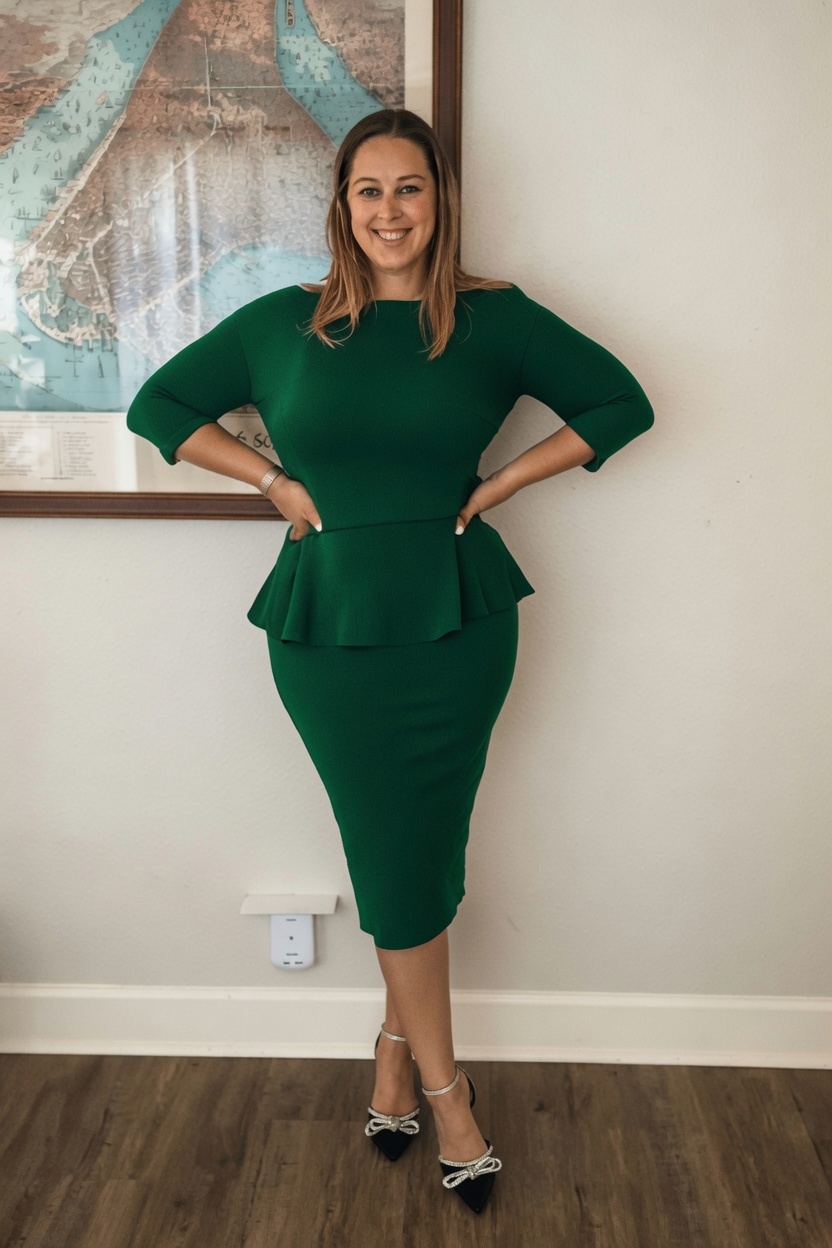
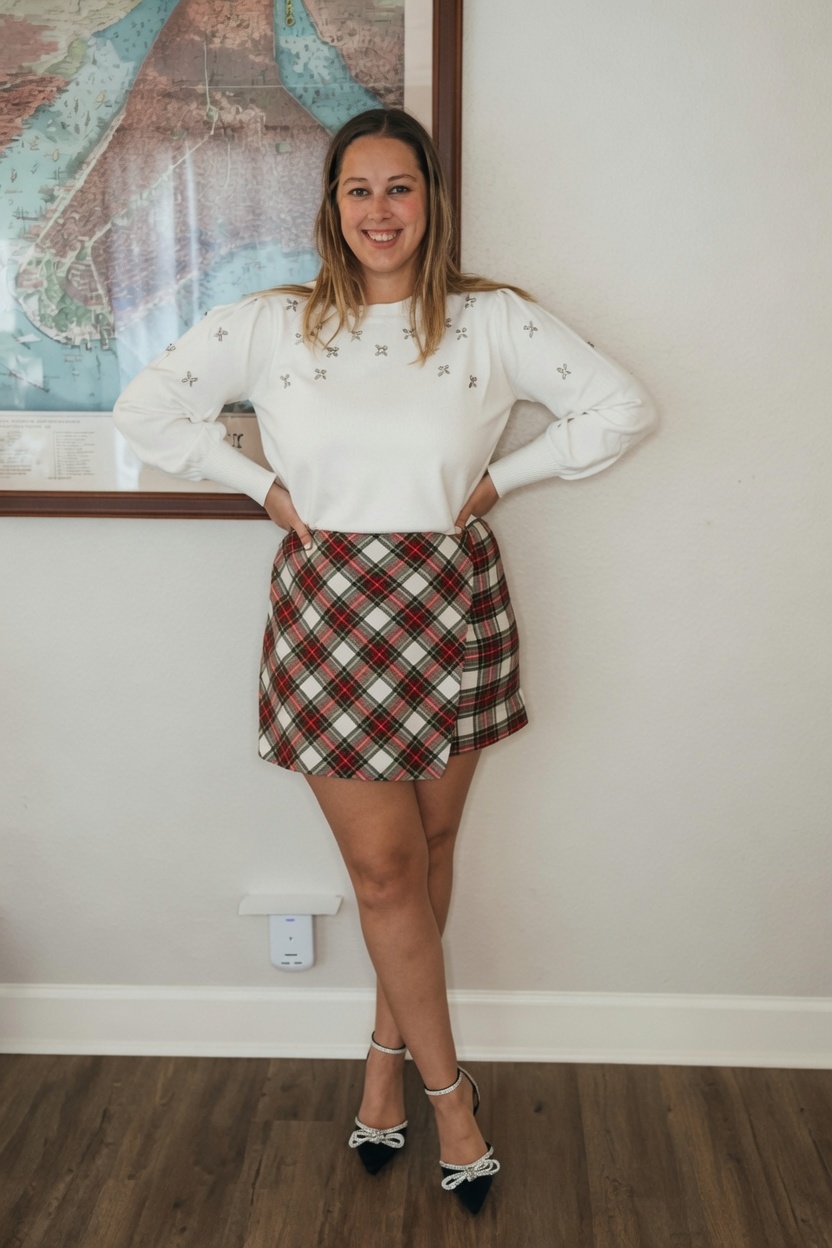
Try before you buy
Try on outfits, accessories and more on yourself in seconds — and save money and time on returns.
Try it onCowboy and cowgirl: the hat, then everything hangs off it
Western costumes fail when the hat is wrong, so start there. The modern cowboy hat descends from John B. Stetson's "Boss of the Plains," designed in 1865 with the wide brim and high crown that every version since has copied. A felt hat in a natural tan or brown almost always looks more expensive than a stiff foam one.
The bandana is the second signature, and it has further to travel than most people realise. The word came into English from a Hindi term for a tie-dyeing technique, a South Asian textile origin long before the knotted cloth became a Western staple. Worn at the neck, it adds colour exactly where the eye lands.
Cowboy hat in felt or straw
Bandana knotted at the neck
Cowboy boots
A belt with a large buckle
A holster at the hip (for a cowboy)
For a cowgirl, the reference point is Annie Oakley, who performed as a sharpshooter in Buffalo Bill's Wild West show from 1885; costume historians credit her fringed skirts, boots and hat as the blueprint. Fringe is the detail to lean on, because it moves and it photographs well.
Fringed skirt or a fringed jacket
Cowboy boots
Statement belt and buckle
Turquoise or silver jewelry
The same felt or straw hat
A wide statement belt is the anchor of a cowgirl look, and a good buckle reads as intentional in every photo. If you want to see how a heavy buckle or turquoise piece sits with your outfit, preview it in the jewelry try-on before you buy. And the fringed skirt or western shirt that forms the base is worth checking for fit too, which our clothing try-on handles.
How to accessorize anything: three rules that travel
Every costume above works on the same principles, and those principles are the ones that stop your everyday outfits looking either bare or overloaded. Learn them once and you'll never again stand in front of the mirror wondering whether you've added too much.
Pick one focal point
Decide which single item is the loudest thing you're wearing, and let everything else support it. In a witch costume that's the hat. In a pirate look it's the gold hoops or the sash. In an everyday outfit it might be one bold earring or a bright bag. When two items fight to be the star, both lose. Choose the winner on purpose.
Use the rule of three
Most complete looks land on about three accessories beyond the base clothing. Look back at the checklists: ears, tail, whiskers. Hat, bandana, boots. Badge, belt, whistle. Three is enough to tell the story and few enough to stay clean. This is also the honest answer to "how many pieces is too many." When you're past four or five and still adding, you've usually crossed from styled into cluttered.
Watch your proportion
Big accessories want a plain background. A dramatic hat, a wide fringe, a heavy pendant all read best when the clothing under them is simple. Balance a large piece up top with something quieter below, and don't hang a delicate chain under a giant collar where nobody will see it. Scale is what separates a look that seems designed from one that seems dumped on.
A costume and a well-dressed everyday outfit are the same problem: a base you already own, one focal point, and a small handful of supporting pieces in the right proportion.
Putting it together, fast
If you're shopping the night before, buy in this order: the hat or headpiece first, because it defines the character; then the one focal accessory that sits near your face; then the one or two prop or waist details that confirm the theme. That sequence gets you a costume that reads clearly even if the last item never arrives.
Almost all of these looks start from clothing you already have and only need the right two or three additions. When you do need to buy those pieces from scratch, you can browse hats, jewelry and props over on Explore and preview the important ones on yourself before the doorbell starts ringing.