Short Cut Hairstyles for Women: A Complete Guide
Find the right short cut hairstyles for women based on face shape and hair texture, with real photos and a virtual try-on so you know before you cut.
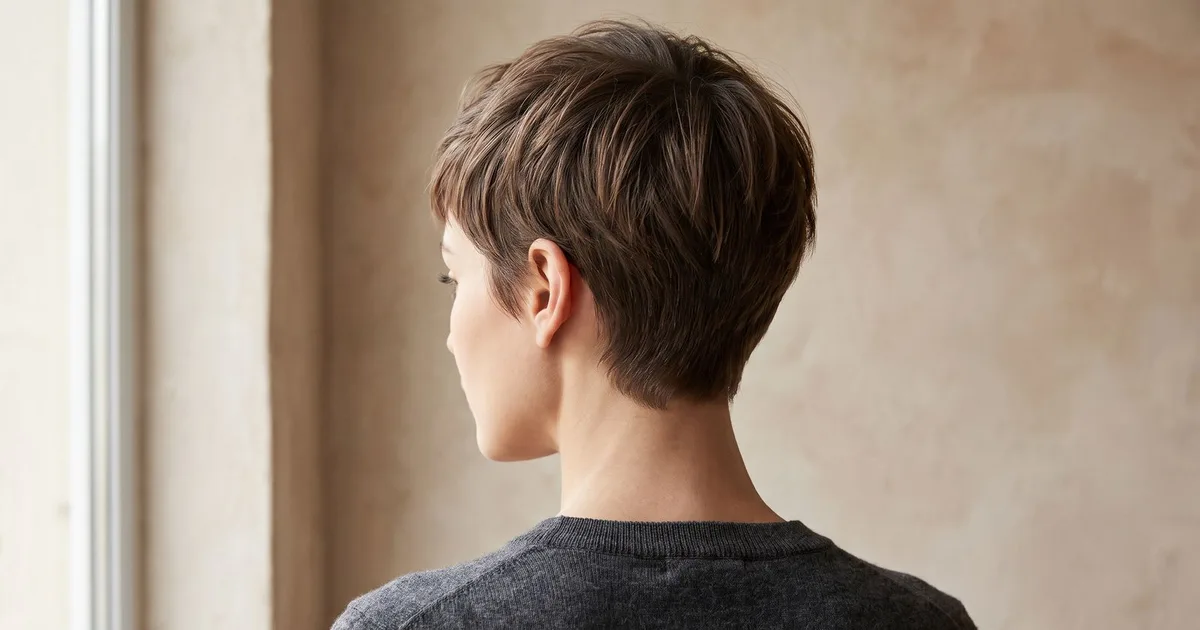
Cutting your hair short is the one style decision that doesn't wash out. That's what stalls most people at the salon door: not whether a pixie would suit them, but whether they'll still like it in three weeks when it starts to grow. This guide is built to answer that before you commit. It's organized by what actually decides whether a short cut works on you, which is your hair texture and your face shape, not a ranked list of trends.
Every named cut below comes with a photo so you can see the line, and you can preview any of them on your own face using our hairstyle try-on before you book anything.
Short hair has always been a statement
Short hair on women isn't new, and it isn't fringe. Coco Chanel cutting her own hair short in the late 1910s is often cited as the moment it became socially acceptable in Western fashion. The 1920s flapper era pushed the bob into the mainstream as women traded elaborate sets for something practical. By 1953, Audrey Hepburn's crop in Roman Holiday had made short hair read as glamorous rather than merely useful.
Two names changed the mechanics of it in the 1960s. Vidal Sassoon pioneered the geometric, wash-and-wear cut, including his five-point bob for designer Mary Quant, which turned short hair from something you set every morning into something you cut well once and let fall into place. Around the same time, model Twiggy's cropped pixie made the look a defining image of the decade. That's the useful takeaway from the history: a good short cut does the work so you don't have to.
Start with your face shape
Short cuts sit close to your face, so the shape of your face carries more of the look than it does with long hair. You can't hide behind length. Here's the short version of what tends to flatter what.
Face shape | What tends to work | What to be careful with |
|---|---|---|
Oval | Almost anything. Pixie, bob, lob, undercut all sit well. | Very little. You have the most freedom. |
Round | Height at the crown and length that falls past the chin to lengthen the face. A lob or a longer pixie with volume up top. | Blunt chin-length bobs that echo the roundness. |
Square | Soft, textured edges. A shag or a piecey pixie softens a strong jaw. | Hard, blunt lines that mirror the jawline. |
Heart | Chin-length shapes that add width at the jaw. A bob or pixie bob balances a wider forehead. | Too much volume at the crown, which can top-heavy the look. |
Treat this as a starting point, not a rule. The fastest way to know is to see the cut on your own face, which is exactly what a free try-on is for.
The core short cuts, and who they suit
The pixie
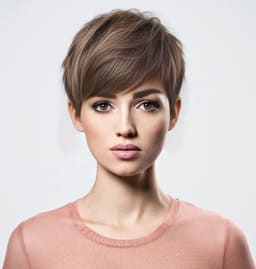
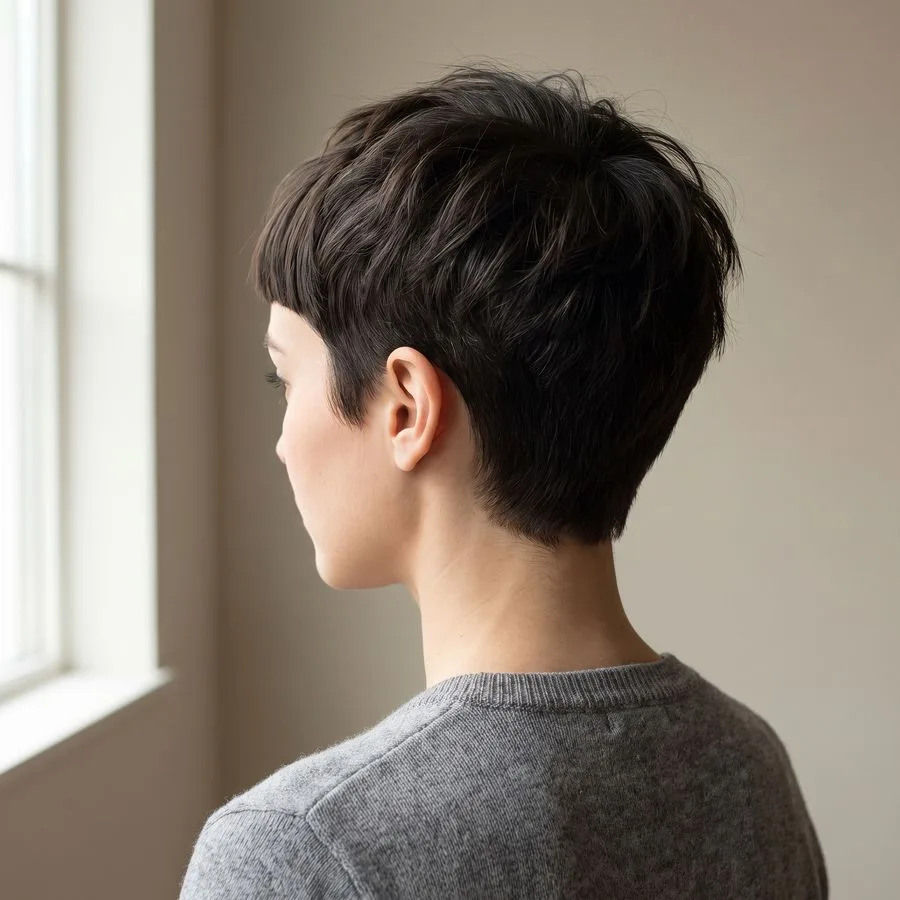
The shortest of the classic cuts and the one with the most attitude. Cropped close at the back and sides with a little more length on top to style. It rewards good bone structure and an oval or heart-shaped face, and it's the lowest-fuss option here once it's cut right.
The bob
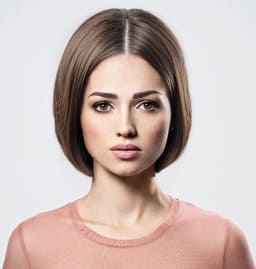
The most adaptable short cut ever made. Cut anywhere from ear to chin, blunt for a sharp geometric line or softened with layers. A blunt bob suits fine hair because the clean edge reads as density. Rounder faces do better with a slightly longer, angled version.
The lob
The long bob, hitting somewhere between the jaw and the collarbone. It's the entry drug for anyone nervous about going short, because it's a real change without the full commitment. It lengthens a round face and grows out gracefully.
The pixie bob
A hybrid: shorter than a bob, longer and softer than a classic pixie. It keeps some length around the ears and nape so it feels less severe, which makes it a good bridge if you love the idea of a pixie but want to ease into it.
The shag
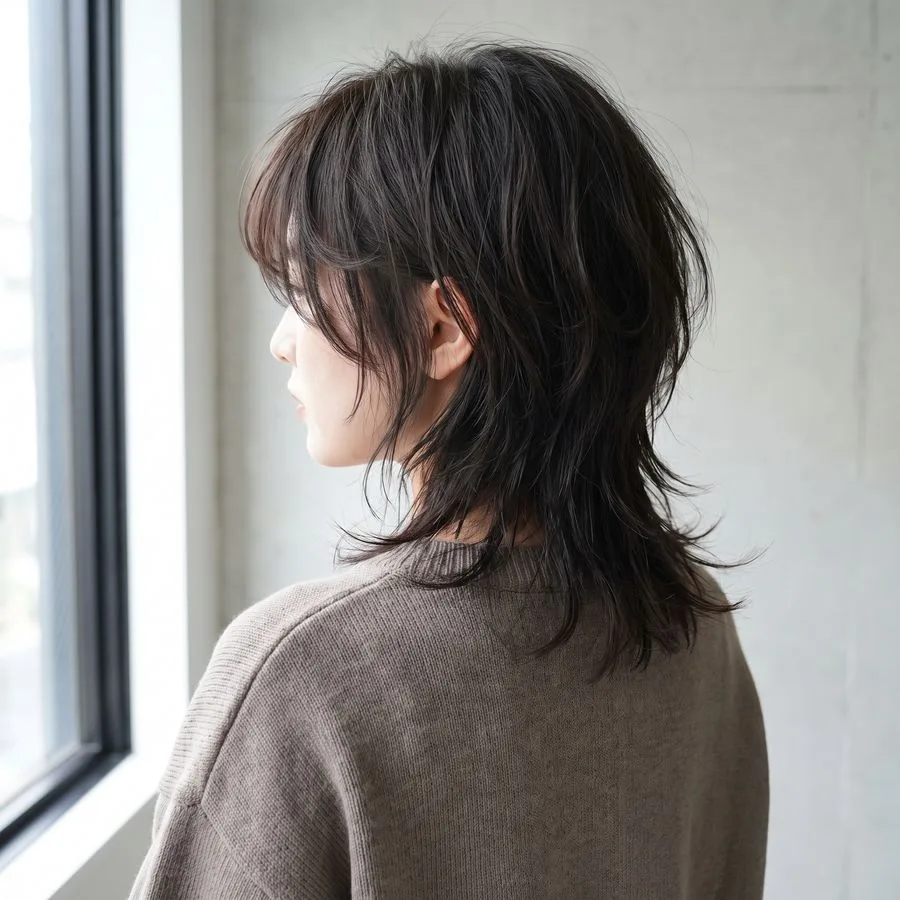
Heavy layers and a lot of movement, usually with a fringe. It's the friendliest short cut for wavy hair and for anyone who wants something with built-in texture. The soft, broken-up edges suit square faces because nothing about it is blunt.
The French crop
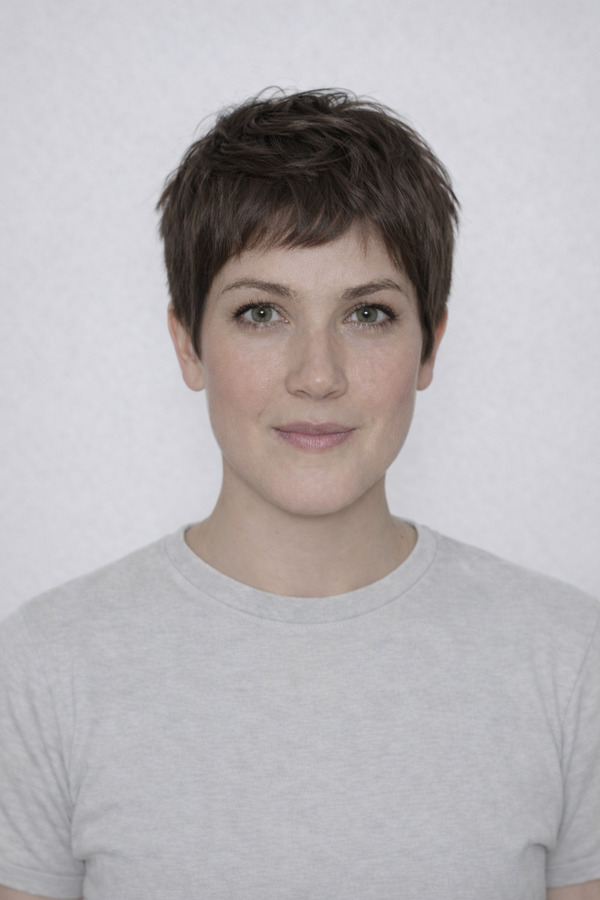
Short and blunt on top with a defined fringe cut straight across, kept tight at the sides. It's clean, a little androgynous, and very low effort. Works best on straight to slightly wavy hair where the fringe holds its line.

See any haircut on yourself
Upload one selfie and try on dozens of cuts and colours in seconds — before you commit at the salon.
Try a haircutThe undercut
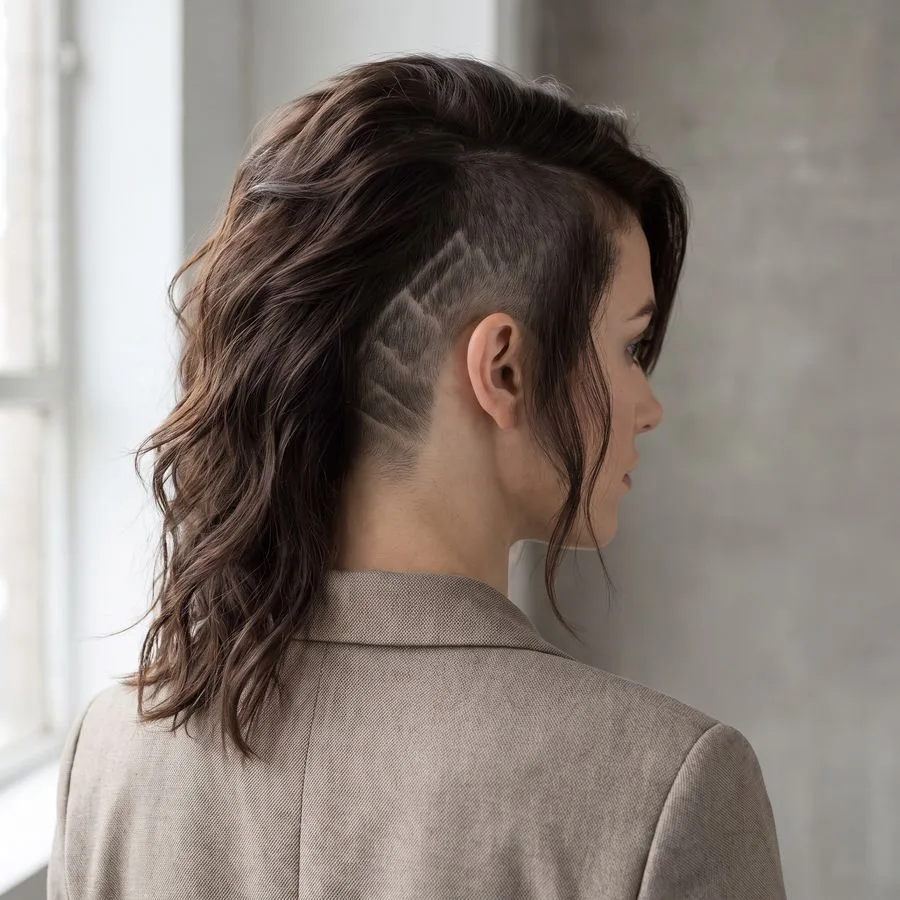
Not a full cut on its own so much as a technique: the sides or back are shaved or clipped very short while the top stays long. The transition between the two is deliberately abrupt, which is what separates it from a tapered cut. Great for thick hair that needs weight removed, and it lets you hide or show the short section depending on how you part it.
The buzz cut
The most fearless option and, honestly, the easiest to maintain. Buzz cuts run on standardized clipper guards: a #1 guard leaves about 1/8 inch of hair, roughly 3mm, with each higher number adding about another 1/8 inch. That's worth knowing before you sit down, because the difference between a #1 and a #3 is the difference between skin-close and a soft velvet. It suits strong features and anyone who wants zero styling time.

Short cuts for natural and relaxed Black hair
Most short-hair roundups quietly assume straight or wavy hair and leave textured hair as a footnote. That's backwards, because short cuts are some of the best showcases for coily and kinky textures. The rules are genuinely different here, so this section stands on its own.
Two things drive every decision. The first is shrinkage: a coily cut can look far shorter than the hair actually is because the curl springs up, so a cut that measures two inches might read as half that. The second is moisture. Coily hair, especially 4C, dries out fast, and a short cut needs regular hydration to stay defined instead of looking dull. If your hair is looser 4A or somewhere in the 4B middle, you'll get more visible length from the same cut and a little more forgiveness on moisture.
The TWA and the big chop
If you're moving away from chemically straightened hair, the big chop is the decisive route: cut off the relaxed ends in one go and start fresh with your natural texture. What you're left with is a TWA, the teeny weeny afro that's the common name for the very short cropped afro many women wear in the early transitioning stage. It's the lowest-maintenance natural style there is and the purest way to see your actual curl pattern. The alternative is transitioning slowly, growing out the natural roots while trimming the relaxed length over months, which spares you the shock of an immediate big chop.
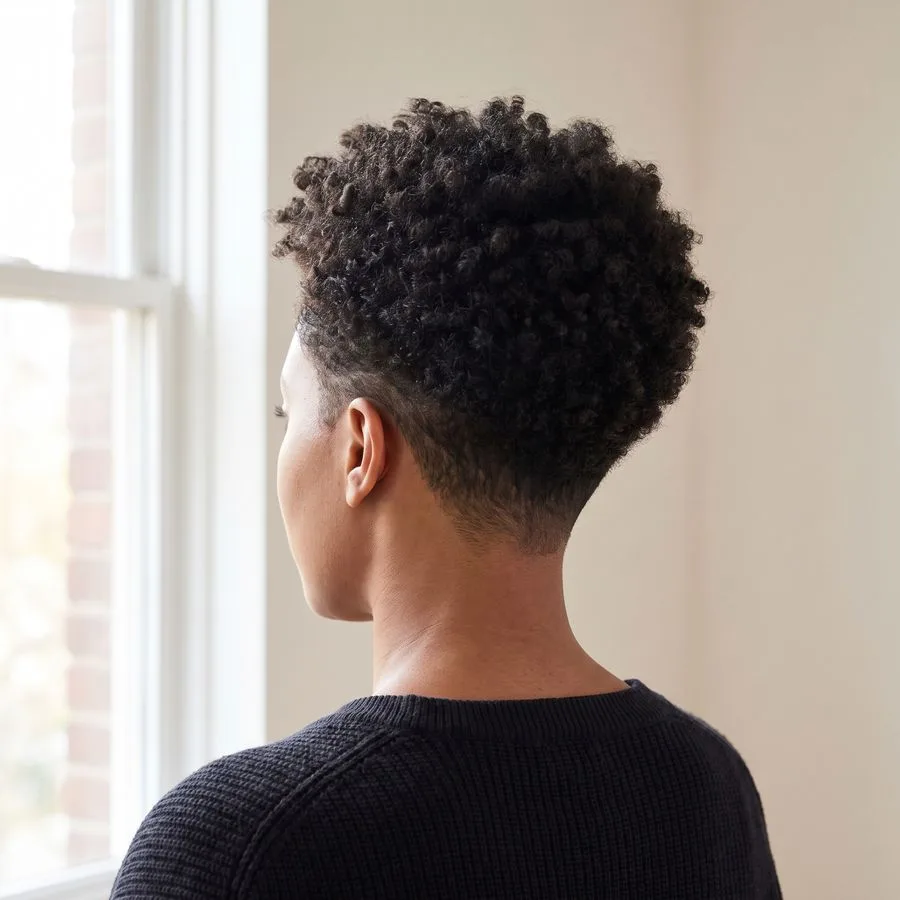
The tapered cut
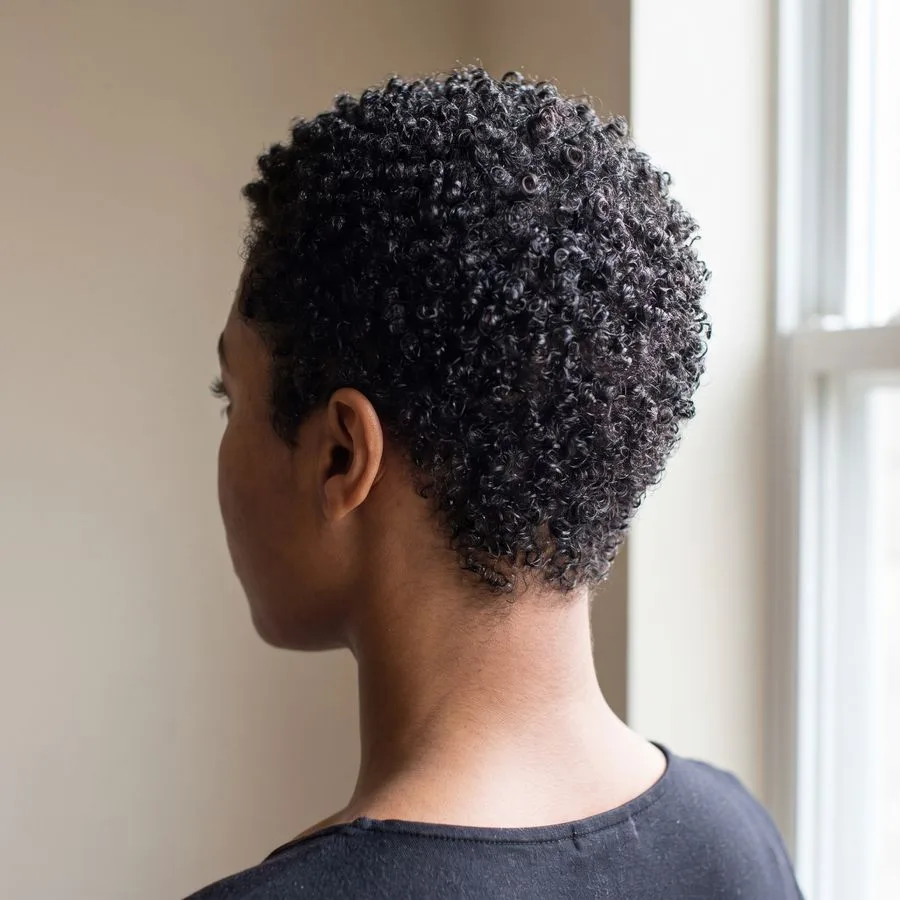
The most flattering way to wear short natural hair, and the one to ask for by name. A tapered cut keeps the nape and sides short and close, with length increasing gradually toward the crown. That gradual blend is what distinguishes it from an undercut's abrupt line. It gives shape and lift to a TWA as it grows, and it works across curl types, from the tight coil of 4C to the springier 4A.
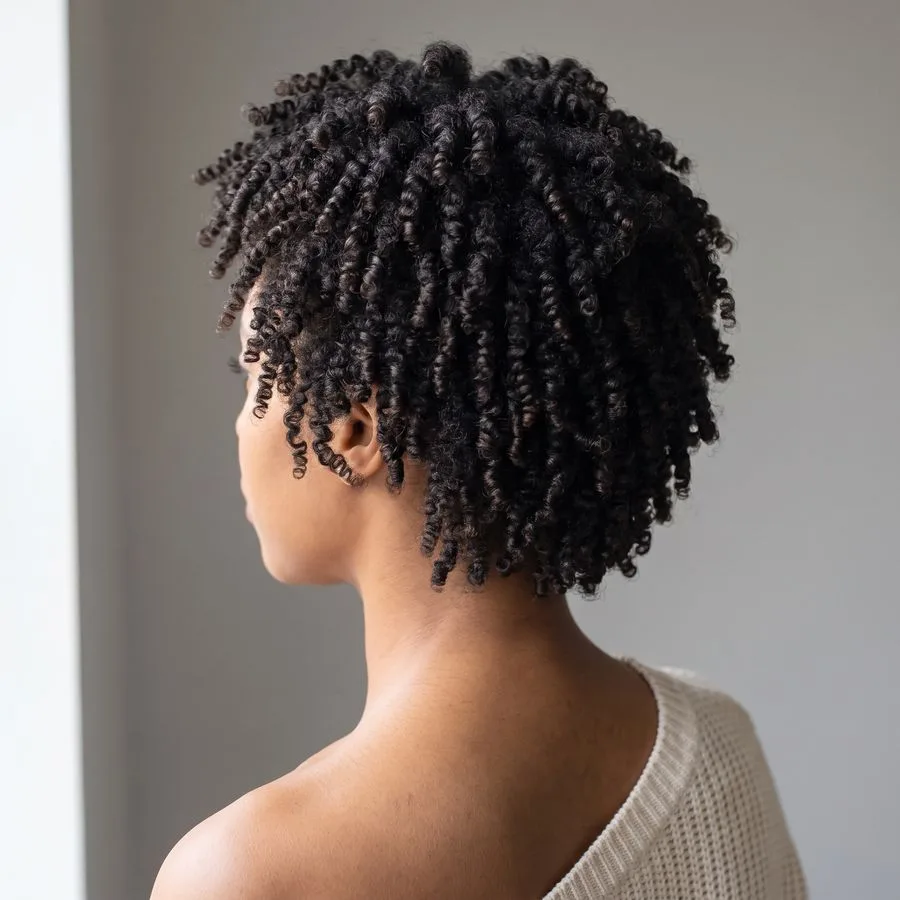
Finger coils
A styling method rather than a cut: sections of damp hair are twirled around a finger to set individual coils. On a TWA or a short tapered cut it gives crisp, uniform definition and buys you several days of style from one wash. It's ideal for showing off a defined 4A or 4B pattern.
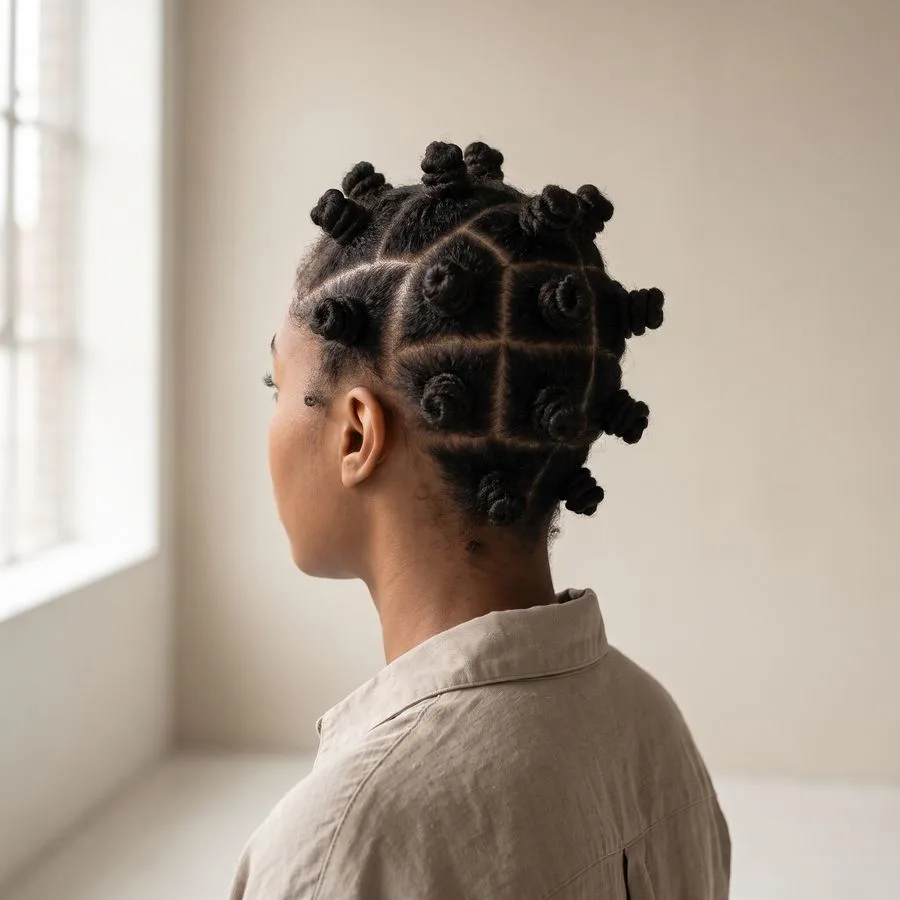
Bantu knots
Small sectioned knots twisted tight against the scalp. Wear them as a bold style in their own right, or take them down for a knot-out that leaves soft, springy waves through short hair. Short twists work on the same principle and protect the hair while you grow it out.
Fine hair versus coarse hair
Texture decides how a short cut behaves as much as face shape decides how it looks. Fine hair wants blunt lines and minimal layering; every layer you remove takes away the density that makes the shape read, so a blunt bob or a solid French crop holds up better than a heavily textured shag. Coarse or thick hair is the opposite problem. It carries weight, so layers, an undercut, or a tapered shape remove bulk and stop the cut from turning into a helmet. Coily and kinky textures are their own category again, where the cut is really about shaping the curl and managing shrinkage rather than removing weight.
How much upkeep are you signing up for?
This is the honest part. The shorter and more precise the cut, the faster it loses its line as hair grows. A sharp pixie or a blunt bob needs a shape-up roughly every four to six weeks to stay looking intentional; let it go and the outline blurs. A lob is the forgiving end of the scale and can stretch to eight or ten weeks. Buzz cuts need the most frequent clipper touch-ups to stay crisp but take the least time each visit. Tapered natural cuts sit in the middle: the taper softens as it grows, which some people like as a built-in transition to more length.
About the regret worry, since it's the real reason people hesitate. Almost every cut here grows through usable stages. A pixie becomes a pixie bob becomes a lob. A TWA becomes a tapered afro. You're rarely stuck with an awkward in-between for long if you trim to shape as it grows rather than just waiting it out.
See it before you cut it
You've narrowed it down. Now settle the question the only way that actually reassures anyone: put the cut on your own face. Try a pixie against a lob, check whether a tapered shape suits you better than a full TWA, and see how a fringe sits above your eyes before a stylist makes it permanent. Start with a hairstyle try-on on your own photo, and if you're still deciding, run a few of them side by side for free. It costs nothing and it's a lot cheaper than growing out a decision you rushed.