Old Money Fashion Style: The Real Rules Behind the Look
What actually makes old money fashion style work, from fabric choices to fit, and how to build the look without the family inheritance to fund it.
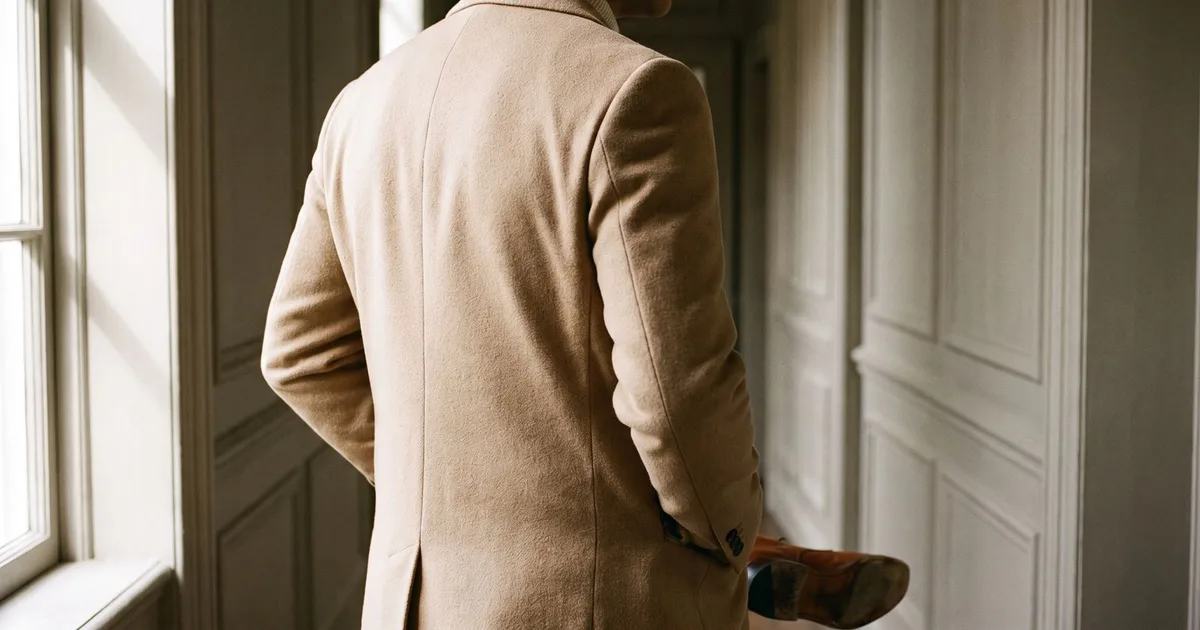
You've seen the look and you know it when you see it: a camel coat that fits, a plain crewneck that clearly cost something, shoes that have been resoled twice. Nothing shouts. Everything holds together. The hard part is working out what actually makes it read that way, because the moment you copy it too literally you end up looking like you're in costume. This is a breakdown of the real sartorial rules behind old money dressing, why they work, and how to build the look without inheriting anything to fund it.
What "old money" actually means, and why it dresses this way
Start with the term itself. Old money describes wealth passed down across several generations, as opposed to new money, which someone earns inside a single lifetime. That distinction is the whole aesthetic in miniature. If your family has had money for a hundred years, you don't need your clothes to announce it. The signaling job is already done. So the wardrobe leans on the opposite of flash: quality you can feel but not see from across a room, pieces that look like they've been owned for a decade, and a near-total absence of visible logos.
That's also why people keep tangling up three labels. Quiet luxury is the newest of them and mostly describes the no-logo, high-material approach on its own terms. Preppy is the older American cousin. It grew out of East Coast Ivy League campuses in the 1950s and 60s, out of collegiate sportswear and the clothing of old-money social clubs, at Princeton, Yale and Harvard. Old money style sits on top of both. It borrows preppy's uniform and quiet luxury's materials, then ages the whole thing down so it never looks new or trying. Preppy can be loud and young. Quiet luxury can be cold and corporate. The old money version is warmer and more lived-in than either.
The DNA: fabric, cut, color
Three things carry the look. Get these right and almost any specific garment falls into line.
Natural fabrics, first and always. Cotton, wool, linen, silk, and above all cashmere. Cashmere is worth understanding because it's the clearest example of the whole philosophy. The fiber is defined by its fineness, generally under 19 microns, which is what separates it from coarser wool and gives a good sweater its weight and softness. Nobody can read the micron count across a dinner table, but they register that the knit hangs correctly and doesn't pill into fuzz by March. That's the quality-over-logo bet in one garment. Tweed and houndstooth belong in the same family: heavier, textured wools that photograph as "country" and wear like armor.
Tailoring that actually fits. An old money blazer is not oversized and not squeezed. The shoulder seam sits where your shoulder ends, the sleeve breaks at the wrist bone, the trouser grazes the shoe. A cheaper jacket altered to fit you will always beat an expensive one that doesn't. This is the single biggest lever you have, and it costs less than the clothes.
A muted palette. Navy, cream, camel, forest green, grey, chocolate, and plenty of white. Colors that sit next to each other without arguing. The point is that you can get dressed in the dark and nothing clashes, and that a jacket from three years ago still works with a shirt you bought last week.
The heritage pieces, and where they came from
A few garments do the heavy lifting in this world, and most of them have a real history that explains why they read as "establishment."
The oxford button-down shirt and the soft-shouldered sack suit are close to the foundation of the whole American version. Brooks Brothers, founded in 1818 and recognized as the oldest surviving clothing retailer in continuous operation in the United States, helped make both of them staples of traditional menswear. The oxford in particular is the workhorse: pale blue or white, worn under a blazer or on its own with the sleeves pushed up.
The polo shirt looks like leisurewear now, but it started as performance kit. French tennis champion René Lacoste introduced a short-sleeved piqué-cotton shirt in 1926 as a relief from the stiff long-sleeved shirts players were expected to sweat through on court. Its migration from the tennis club to everyday wear is exactly the kind of country-club-to-daily-life move this style is built on.
The trench coat has the most dramatic backstory. It comes from waterproof gabardine garments developed by Thomas Burberry and adapted for British Army officers in the early 20th century before settling into civilian wardrobes for good. A good beige trench over a knit and trousers is one of the most reliable old money outfits there is, for anyone.
On the feet, the penny loafer carries most of the weight. It descends from the Norwegian Aurland moccasin and took off in America after G.H. Bass started selling its "Weejuns" in 1936), and it has anchored preppy and old-money dressing ever since. Boat shoes cover the warm-weather, off-duty end of the same idea.
Then there's the label that packaged all of this for the modern imagination. Ralph Lauren started with a menswear tie business under the Polo name in 1967 and built it into a full lifestyle brand around Ivy League and equestrian imagery. That equestrian thread, the riding boots, the tweed, the polo references, is where a lot of the "country estate" feeling in this style comes from, whether or not anyone involved has been near a horse.
Old money style for men
For men the look is essentially a refined version of the Ivy uniform, and it's easier to assemble than most guides make it sound. Men searching in comparative terms, old money versus streetwear, usually want the specific pieces rather than the theory, so here's the short version of the kit.
A navy blazer, ideally soft-shouldered rather than sharply structured, worn with grey or cream trousers.
Two or three oxford shirts in white and pale blue, and a couple of quality polos for warm months.
Chinos in stone, olive and navy, hemmed to sit clean on the shoe with little or no break.
A cashmere or fine-wool crewneck to layer over a collar in the cooler half of the year.
A tweed or houndstooth sport coat for autumn, and a beige trench for the rain.
Penny loafers and a pair of white-soled boat shoes; leather in brown, not black, most of the time.
One good watch on a leather strap, and a signet ring at most. Restraint is the point.
The mistakes are predictable. Too many patterns at once. A jacket a size too big. Loud logos, which undo the entire premise. And brand-new everything, which reads as a purchase rather than a wardrobe. Buy fewer, better things and let them soften. If you want to see how a soft-shouldered blazer or a trench actually sits on your frame before committing, you can try the tailored pieces on virtually and judge the shoulder line and length on yourself instead of on a model.
Old money style for women
The women's version runs on the same fabrics and palette, with a slightly wider set of shapes to work with. Women's searches tend toward outfit formulas rather than single items, so think in combinations rather than a shopping list.
The reliable building blocks are a tailored blazer, a crisp white or blue oxford shirt, a cashmere crewneck or cardigan, and well-cut trousers in cream, navy or grey. Add a knee-length or midi skirt, a tennis or pleated skirt for the sportier country-club register, and a shirtdress for summer. The trench coat does the same job here as it does in the men's wardrobe, thrown over almost anything. A few formulas that always land:
White shirt, tailored trousers, loafers, gold hoops or studs. Weekday, effortless.
Cashmere sweater over a collared shirt, pleated skirt, low heels or ballet flats.
Trench over a knit dress with knee-boots, an equestrian nod for cold weather.
Navy blazer, white tee, straight jeans, boat shoes for the off-duty weekend.
Jewelry is where the women's look declares itself, quietly. Pearls are the signature: a single strand, small studs, or a bracelet, worn like they've been in a drawer for years rather than bought last week. A slim watch, a fine gold chain, maybe a signet. Nothing oversized, nothing that sparkles from across the room. Because the pieces are so understated, it's worth seeing how a strand of pearls or simple studs actually reads against your neckline, and you can preview jewelry virtually before you buy anything.

Try before you buy
Try on outfits, accessories and more on yourself in seconds — and save money and time on returns.
Try it onHow to get the look without old money
This is the real question most people are asking, and the honest answer is that the aesthetic is more forgiving of a budget than it looks, because it was never about newness in the first place. A worn-in wardrobe is the goal, so secondhand and vintage aren't a compromise, they're the shortcut. Thrift stores, consignment and estate sales are full of exactly the tweed jackets, camel coats and lambswool knits this style wants, often from the heritage names, at a fraction of retail.
Spend on the two things that touch your whole outfit: fit and shoes. A tailor and a resoleable pair of leather loafers will carry cheaper pieces.
Buy natural fibers even at the low end. A basic cotton oxford or a lambswool sweater looks richer than a synthetic "luxury" lookalike.
Kill the logos. A plain knit with no branding reads more old money than a designer piece with a monogram plastered across it.
Stick to the muted palette so everything you own combines, which stretches a small wardrobe a long way.
Let things age. Don't replace a good coat because it's creased. The patina is the point.
A note on monogramming, since it comes up. Discreet initials on a shirt cuff or a piece of luggage sit inside the tradition. A logo the size of your fist does not. The line is whether the mark is for you or for the audience.
Avoiding the costume
The most common failure isn't buying the wrong things, it's buying all of them at once and wearing them together. Head-to-toe tweed, a signet on every finger, a pastel sweater knotted over the shoulders on top of a polo on top of a popped collar: that's cosplay, and everyone can see it. The people who actually dress this way mix one heritage piece into otherwise plain clothes. A trench over jeans and a white tee. Loafers with chinos and a crewneck. The reference is there, but it's diluted.
It's also worth being straight about the classist undertone some people flag, because the trend does trade on signals of inherited wealth. You can take what's useful, the emphasis on fit, natural materials, and buying less, without treating it as a performance of money you're pretending to have. Read as a set of good habits rather than a class disguise, it's just a durable, low-drama way to dress. Since footwear carries so much of it, it helps to try loafers and boat shoes on before you commit, and when you're ready to fill in the gaps you can browse specific pieces in the shop.
Build it slowly. One blazer that fits, one good coat, a couple of natural-fiber knits, shoes you'll resole instead of replace. The look isn't a haul. It's the absence of one.

Tobias Scharl
Further reading

Sunglasses Styles for Round Faces That Add Definition
Find the sunglasses styles for round faces that add angles, lengthen features, and skip the frames that make cheeks look fuller than they are.
Fringe Texture Explained: In Hair and On Clothes
Fringe texture means different things on hair versus fashion pieces. Here's how to spot good texture in bangs and wear fringe on clothes without looking
What to Wear to a Funeral: A No-Stress Guide
Not sure what to wear to a funeral? Here's how to choose respectful, appropriate clothing fast, from suits and dresses to shoes and tricky edge cases.